
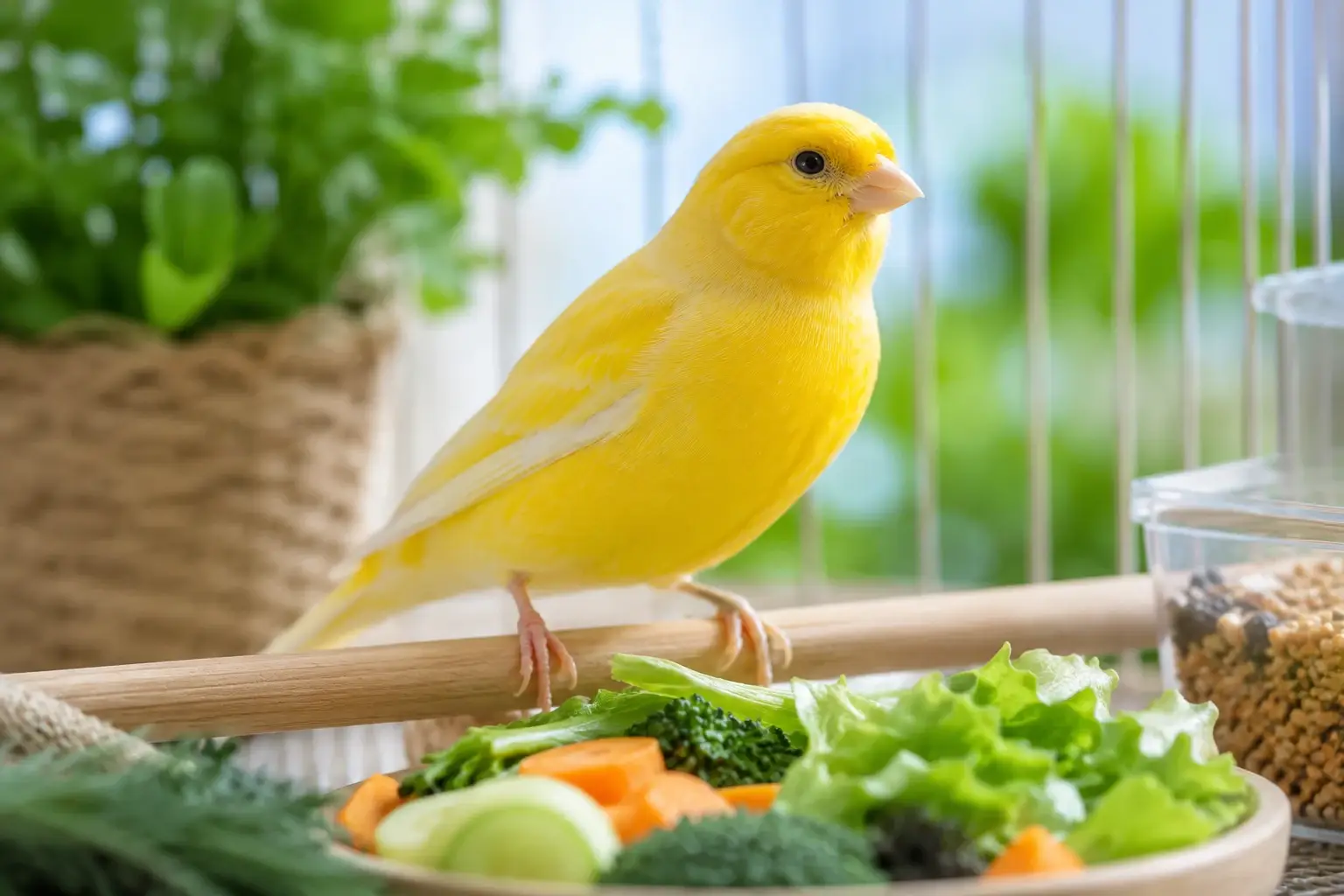
A healthy canary diet is built around a quality staple food, fresh vegetables, limited fruit, clean water, and additional protein only when needed, such as during molting or breeding. Feeding only seeds is one of the most common nutritional mistakes because it can leave important dietary gaps over time.
Good nutrition influences far more than body weight. It affects feather condition, energy levels, immune function, breeding success, and even the strength and consistency of a canary’s song. Building a balanced diet doesn’t have to be complicated once you understand the role each type of food plays.
This canary diet guide explains what they eat in the wild, what should make up a healthy daily diet, when to offer protein or supplements, how nutritional needs change throughout life, and the common feeding mistakes every owner should avoid.
A healthy canary diet isn’t built around a single “perfect” food. Instead, it combines several food groups, each serving a different nutritional purpose. The table below provides a quick overview before we explore each component in detail.
Table 1: Core Components of a Healthy Canary Diet
| Diet Component | General Role | Learn More |
| Quality seed mix or pellets | Forms the daily dietary foundation | Best Seeds for Canaries / Canaries Pellet vs Seed Diet |
| Fresh vegetables | Provide vitamins, minerals, fiber, and hydration | Fruits & Vegetables Canaries Can Eat |
| Fruit | Offer variety and natural sugars in moderation | Fruits & Vegetables Canaries Can Eat |
| Egg food or other protein | Supports molting, breeding, and chick rearing | Can Canaries Eat Eggs? |
| Calcium source (e.g., cuttlebone) | Supports bone health and eggshell formation | (Covered within this guide) |
| Fresh, clean water | Essential for hydration and digestion | (Covered within this guide) |
What Do Canaries Eat in the Wild?
Wild canaries primarily eat grass seeds, weed seeds, and other naturally available plant material. Depending on the season, they hunt small insects. They also consume fresh shoots and naturally available plant material. Understanding this natural diet helps explain why pet canaries benefit from a varied diet rather than seeds alone.
Natural Foods Wild Canaries Forage
The modern Domestic Canary descends from the Atlantic Canary. These wild birds still live across the Canary Islands. Natural foraging occupies most of their daylight hours. They spend significant time scanning the ground. They explore low shrubs for meals.
Their food shifts throughout the year based on weather changes. Spring brings fresh sprouting grasses. Late summer leaves dry seed pods behind. When raising chicks, these birds hunt small insects. Finding all this food requires constant flight.
Why Pet Canaries Need a More Balanced Diet
A pet bird expends far less energy inside a home. That is why replicating an island menu indoors is not practical. Offering just one type of food restricts dietary variety.
Without miles of daily flight, a caged bird needs carefully measured meals. Variety ensures your pet receives diverse vitamins. Providing different food types prevents unwanted weight gain. This balanced approach protects against long-term nutritional gaps.
| Wild Foods | Captive Foods | Nutritional Purpose |
| Sprouting grasses | Leafy green vegetables | Provides hydration along with vitamins |
| Weed seeds | Packaged daily diets | Supplies basic daily energy |
| Small insects | Prepared egg food | Delivers protein for active growth |
The Building Blocks of a Healthy Canary Diet
A healthy canary diet provides the right balance of carbohydrates, protein, healthy fats, vitamins, minerals, and fiber. Because no single food contains every essential nutrient, combining different food groups is the key to long-term health. Fats provide sustained energy, while protein supports muscle and feather development. Vitamins and minerals help maintain healthy body functions, and fiber supports normal digestion.
Building this foundation takes consistent effort. Food provides the raw materials for every physical process. Supplying the proper mix of elements prevents long-term health issues. Pet birds depend on the dishes placed inside their cage.
Seeds as One Part of the Diet
Seeds remain a familiar foundation for many pet birds because they provide fats and carbohydrates. As emphasized throughout this Canary Diet Guide, relying entirely on a seed-only diet leaves important nutritional gaps over time.
A varied bowl prevents selective eating habits. Offering seeds alongside fresh items ensures better overall health. Seed mixes provide comfort and natural foraging actions. For deeper details on selecting appropriate dry mixes, read our guide on the Best Seeds for Canaries.
Fresh Vegetables and Fruits
Fresh vegetables and fruits provide moisture, fiber, vitamins, and natural antioxidants. Leafy greens are especially valuable, while fruit is best offered in smaller amounts as a source of variety. Experienced keepers offer small portions to prevent spoiling in the cage. Always remove uneaten pieces to maintain cage hygiene. Discover safe options in our dedicated overview of Fruits & Vegetables Canaries Can Eat.
Pellets and Other Commercial Foods
Manufactured diets offer an alternative base for daily meals. Pellets pack vitamins and minerals into uniform pieces. This prevents birds from picking out favorite bits while leaving healthy portions behind.
Some birds accept formulated pieces without fuss. Others require time to recognize them as food. Learn more about this specific option in our Canaries Pellet vs Seed Diet analysis.
Protein Sources During Special Life Stages
A bird’s protein demands change throughout the year.
- When a bird grows fresh feathers, it requires significant bodily resources.
- A molting bird needs extra protein to replace old plumage.
- Breeding adults require elevated nutrition to support active reproduction.
- Feeding chicks demands constant protein-rich meals.
- Specialized egg food helps meet these seasonal spikes.
In such demanding periods, providing extra support prevents exhaustion.
Calcium, Minerals and Supplements
Birds require constant access to minerals for the following reasons:
- Calcium supports strong bones.
- Vitamin D3 helps the body absorb this calcium well.
- Attaching a cuttlebone to the cage bars provides a steady source.
- Hanging mineral blocks gives birds a place to scrape their beaks while taking in trace elements.
- Powdered supplements exist for specific situations.
- Liquid vitamins offer another delivery method.
You should always rely on fresh food first before adding artificial vitamins to the water bowl.
Veterinary Insight: A canary’spoor feather quality, chronic lethargy, or soft-shelled eggs may result from nutritional deficiencies, but they can also indicate liver disease, parasites, reproductive disorders, or other underlying illnesses. Before adding vitamin or mineral supplements, an avian veterinarian should determine whether diet alone is responsible.
Table 2: Essential Nutrients in a Healthy Canary Diet
| Nutrient | Role | Typical Food Source |
| Carbohydrates | Provides baseline daily energy | Dry seed mixes |
| Protein | Supports feather growth | Prepared egg food |
| Fats | Sustains internal organ function | Oil seeds |
| Vitamin A | Maintains respiratory tissue | Leafy green vegetables |
| Calcium | Fortifies bone structure | Cuttlebone |
Foods That Should Make Up Most of Your Canary’s Diet
Most of a healthy canary’s diet should come from a quality staple food, supported by fresh vegetables, limited fruit, clean water, and additional protein only when required. Building meals around these core foods helps provide balanced nutrition throughout the year.
Everyday Staple Foods
The bulk of the daily diet consists of a reliable dry base. This base remains in the cage from morning until night. Birds eat small amounts throughout the daylight hours to sustain their fast metabolism. A practical Canary Diet Guide balances this continuous dry portion with fresh produce to provide necessary hydration and vitamins.
The dry portion makes up the majority of the total food volume consumed. The fresh portion acts as a vital daily supplement rather than the main calorie source. Mixing these two distinct components forms a predictable feeding routine. A consistent routine helps birds feel comfortable with their daily meals, while removing uneaten fresh food before evening prevents spoilage.
Keeper Tip: Many experienced canary keepers offer fresh vegetables in the morning when birds are most active and remove any leftovers a few hours later. This simple routine encourages natural feeding behavior while reducing the risk of spoiled food remaining in the cage.
Foods to Offer Occasionally
Certain items serve better as periodic additions rather than daily staples. Rotation of these occasional foods prevents diet fatigue. Offering new tastes keeps the bird interested in the food bowl throughout the week.
Offering occasional items on alternating days adds necessary nutritional variety without overwhelming the digestive system. It prevents the bird from filling up on sweeter or richer items at the expense of its basic dietary foundation.
Serving these extra foods in small portions maintains proper physical weight. A bird focused on rich treats might ignore the baseline nutrition it requires. What you need is to moderately provide these supplemental items.
Foods Reserved for Special Situations
Molting places considerable nutritional demands on a canary. Breeding pairs need enhanced meals to support active reproduction. Producing eggs drains bodily reserves at a rapid pace. Young growing chicks require softer items to fuel their development into adult birds. A bird in recovery from an illness needs comforting meals that take little effort to digest.
When people adapt the standard diet during these specific times, it helps their bird manage the temporary physical strain. Returning to the baseline diet happens once the situational demand passes. This targeted support prevents long-term exhaustion.
Table 3: Everyday Foods vs Occasional Foods
| Food Category | Frequency | Purpose |
| Dry Base | Daily | Sustained baseline energy |
| Fresh Greens | Daily | Hydration and essential vitamins |
| Sweet Fruits | Occasional | Dietary variety |
| Protein Supplements | Situational | Growth and physical recovery |
Foods That Require Extra Caution
Not every food should be offered to a canary with the same frequency. Some foods are healthy only in moderation, while others should be avoided entirely because they may cause serious health problems. Learning the difference helps prevent nutritional imbalances, obesity, and accidental poisoning.
Treat Foods
Treats bring joy to the feeding routine. Offering rich snacks builds trust with your pet. Maintaining the boundaries set in this Canary Diet Guide ensures these concentrated calories do not ruin their daily appetite.
Everyday treats fill the crop with poor nutrition. The bird will ignore its required basic meals in favor of sweet options. Maintaining clear boundaries around these items protects their baseline health.
Limiting access ensures the bird eats appropriate meals first. Small portions given just once a week prevent long-term dietary imbalances. This moderation guarantees that the bird receives essential nutrients.
Toxic Foods Need Their Own Guide
Certain household foods present severe dangers to birds. A small bite of the wrong item causes rapid internal damage. If you recognize these daily risks, you will protect your pet from accidental harm. Knowing what to exclude from the cage matters just as much as providing good meals. Learn about these specific hazards in our guide covering Toxic Foods for Canaries.
Veterinary Insight: Many accidental poisonings begin with well-intentioned human foods. If a canary develops sudden weakness, vomiting-like regurgitation, breathing difficulty, or seizures after eating something unusual, immediate veterinary care is essential.
Water Is Just as Important as Food
Fresh canary drinking water sustains all internal physical functions. Without proper hydration, digesting dry seeds becomes a difficult process. The bird’s body needs moisture to break down hard items inside the crop. Providing clean water for canaries ranks alongside offering balanced meals. Overlooking the liquid dish impacts the bird just as much as an empty food bowl.
Daily Water Requirements
A bird drinks numerous times throughout the daylight hours. Stagnant bowls gather dust from the surrounding room. Washing the container each morning removes the slippery residue found on inside surfaces. Cleaning the dish with warm water and mild dish soap each day removes this hidden film before fresh water is added. Rinsing the dish well prevents unwanted soapy tastes.
Keeping Water Clean
Birds drop empty seed hulls into their drinking bowls while eating. Droppings sometimes splash into open dishes placed low in the cage. A thorough Canary Diet Guide covers proper bowl placement because this physical contamination turns clear liquids cloudy by mid-afternoon.
Placing the water source higher up near a solid perch reduces falling debris. Checking the bowl multiple times a day helps maintain clear hydration.
Keeper Tip: If your canary regularly drops seed hulls into its water, try placing the water container away from the main feeding perch. Even a small change in position often keeps the water cleaner throughout the day.
Switching to a closed plastic silo drinker offers another option to block dropping contamination.
Veterinary Insight: Small birds can become dehydrated much faster than many owners realize, particularly during illness or hot weather. A canary that stops eating or drinking for more than a short period should be examined promptly, as dehydration can develop rapidly and worsen many underlying conditions.
Canary Diet Guide: Adjusting Meals for Different Life Stages
A canary’s nutritional needs change throughout its life. Young birds, healthy adults, molting birds, breeding pairs, and senior canaries all benefit from diets that match their stage of life. Making these adjustments helps support healthy growth, feather quality, reproduction, and long-term well-being.
Young Canaries
Growing bodies require rich fuel to build muscle and establish strong bones. Young birds expend significant energy reaching their full physical size. Their daily meals must provide concentrated calories to support this rapid early development.
Presenting softer items helps them transition away from parent feeding into independent eating. Offering diverse tastes during this early window creates adaptable eaters later in life. They learn to accept different textures before their habits become rigid.
Adult Maintenance
A mature bird with no underlying health issues requires a predictable baseline diet. Their daily routine focuses on maintaining their current weight and preserving good physical condition. Providing a consistent mix of dry goods alongside fresh produce meets their resting demands well.
Many experienced owners keep the daily portions stable to prevent unwanted weight gain during quiet seasons. A resting adult does not need the heavy calories required during more demanding life phases.
Molting Birds
Dropping old feathers and growing a fresh coat takes a significant physical toll. The body requires enhanced fuel to produce hundreds of new feathers at the same time. This specific period demands a sharp increase in dietary vitamins and fats.
If you fail to supply rich nutrition during a molt, it will leave your bird exhausted. The resulting new coat might appear dull or brittle without the right nutritional building blocks in the food dish.
Breeding Birds
The reproductive cycle drains internal resources at a rapid pace. Both male and female canaries need dense nutritional support to manage the physical strain of courtship.
An owner should supply extra calories to prepare their bird’s body for the heavy physical demands ahead. A depleted bird cannot sustain a successful breeding season without a fortified daily bowl. The parents need reliable energy reserves to manage the active nesting period.
Senior Canaries
Older birds naturally slow down and fly less throughout the day. A less active lifestyle means they burn far fewer calories. Continuing to offer rich meals leads to excess weight in aging pets.
This provides a strong need to adjust a canary bowl to include lighter options for protecting their resting system. Easy-to-digest items help them maintain comfort in their later years. You should adjust the portions to match their reduced daily energy output.
Table 4: How Nutritional Needs Change Through Life
| Life Stage | Primary Nutritional Focus | General Considerations |
| Young Canaries | Concentrated growth fuel | Needs soft textures for early eating |
| Adult Maintenance | Baseline daily maintenance | Prevents excess weight gain |
| Molting Birds | Feather production support | Demands dense nutritional building blocks |
| Breeding Birds | Active reproduction fuel | Requires rich caloric reserves |
| Senior Canaries | Gentle resting digestion | Needs reduced fat portions |
Signs Your Canary’s Diet Needs Improvement
A healthy canary should have smooth feathers, steady energy, normal droppings, and a stable body weight. Changes in appearance, behavior, or appetite may indicate that the diet needs improvement or that an underlying health problem requires veterinary attention.
Healthy Signs
A well-fed bird displays smooth feathers lying flat against the body. The plumage appears vibrant under natural room lighting. Daily energy remains steady from morning until dusk. The bird moves across different perches with clear purpose. Normal droppings hold a firm shape surrounded by clear liquid.
Consistent daytime activity indicates the provided food delivers proper fuel. A bright eye and clear breathing show the physical body receives adequate support. The bird maintains a stable physical weight week after week.
Warning Signs
Physical changes are often the first sign that something is wrong with your canary. For example:
- Fluffed feathers during warm weather may indicate illness or poor body condition rather than normal behavior.
- Dull plumage lacking shine indicates missing dietary fats.
- A bird sleeping on the cage floor needs a thorough review of its daily meals.
- Noticeable changes in droppings form signal digestive stress from the current food choices.
- General weakness or a sudden stop in daytime singing suggests the feeding routine lacks essential nutrients.
Ignoring these outward signals allows minor dietary gaps to become severe physical problems. Assessing the food dish remains the primary step when outward appearance declines.
Veterinary Insight: Weight loss, persistent feather abnormalities, repeated egg-binding, or ongoing lethargy are rarely specific to nutritional deficiencies alone. Similar signs may occur with infections, parasites, liver disease, or metabolic disorders, making a veterinary examination essential before changing the diet or adding supplements.
Common Canary Diet Mistakes to Avoid
Many common feeding problems result from offering too much of one food, ignoring dietary variety, or changing diets too quickly. Avoiding these mistakes helps prevent nutritional deficiencies and supports long-term health.
Feeding Too Much of One Food
Providing a single item in large amounts creates an unbalanced meal. Canaries naturally prefer richer or sweeter foods. If these are always available, they may ignore more nutritious staple foods and develop an unbalanced diet.
When owners rely heavily on one specific dry mix, it limits their bird’s nutritional intake. Remember, offering measured portions prevents this selective behavior. Measuring the daily food encourages the bird to consume everything placed in the dish.
Keeper Tip: Canaries can be cautious around unfamiliar foods. If your bird ignores a new vegetable, don’t assume it dislikes it after one attempt. Offering the same food several times over the following weeks often leads to gradual acceptance.
Ignoring Dietary Variety
Serving the same bowl every day creates nutritional blind spots. A rigid routine denies the bird diverse vitamins and trace minerals. Rotating fresh greens and occasional additions builds a robust internal system.
A good practice is to introduce different textures to keep your bird engaged with its meals. Regular rotation of suitable foods encourages natural foraging behavior while providing a broader range of nutrients over time.
Sudden Diet Changes
In practice, we have observed that introducing an unfamiliar meal plan overnight causes digestive stress. Birds view new items with natural caution. That is why we stress on transitioning methods in this Canary Diet Guide to prevent empty stomachs when introducing unknown pieces into the cage. A bird might choose hunger over eating unrecognized food.
We also suggest a gradual approach while practicing a transition of diet. When you mix a small portion of the new food into the old familiar bowl, this allows the bird to recognize the addition. Phasing out older items over several weeks protects a bird’s digestion. This steady pace prevents unnecessary physical strain during the switch.
Frequently Asked Questions
While writing this canary diet guide, it is essential to answer some fundamental questions.
Can canaries survive on seeds alone?
A diet restricted to plain seeds creates a noticeable nutritional deficit over time. Seeds contain heavy fats but lack essential vitamins required for sustained wellness. A bird eating nothing but dry mixes might sustain itself for a period, but its outward physical condition will decline. It will eventually show signs of dull feathers and low daily energy. Adding fresh greens and varied items bridges these daily nutritional gaps.
Should I change my canary’s diet during molting?
Losing and regrowing a full coat of feathers drains bodily resources fast. During this specific window, the bird requires denser nutrition. Offering extra protein sources helps the physical body manufacture new plumage. Providing specialized molting foods prevents the bird from becoming exhausted during the process. Once the new feathers finish growing, you return the bowl to the baseline maintenance diet. Modifying the diet protects their internal reserves.
Do indoor canaries need different nutrition?
Birds kept inside a climate-controlled home burn fewer calories than those exposed to outdoor weather fluctuations. An indoor pet lacks the opportunity for constant wide-open flight. Because their daily physical effort remains low, their meals require careful management to prevent excess weight gain. A dense diet designed for active outdoor aviaries will overwhelm a quiet indoor pet. Adjusting portions to match their contained environment keeps their physical condition stable.
How can I tell if my canary is eating enough?
Watching the food dish alone gives an incomplete picture. Birds instinctively crack dry items and leave the casings behind. This makes a bowl look full when it contains only empty shells. A light breath across the dish clears away these loose casings. This action reveals the true amount of uneaten food beneath. Observing consistent daytime droppings provides another clear indicator of adequate intake. A steady physical weight and active daytime movement confirm the daily meals meet their current energy needs.
Conclusion
Providing proper nutrition goes beyond filling a daily dish. A balanced diet relies on a stable dry base mixed with fresh produce. We built this Canary Diet Guide to provide the practical foundation needed for lifelong health.
Adapting meals during demanding life stages prevents seasonal exhaustion, and observing your bird’s eating habits helps identify potential problems early. Regularly observing your canary’s eating habits helps identify potential problems early and supports long-term health.
Refine your specific feeding plan by exploring our focused resources. Read our guide on the Best Seeds for Canaries alongside Fruits & Vegetables Canaries Can Eat. Learn daily routines in How Often Should You Feed a Canary. Expand your understanding by reviewing the Canaries Pellet vs Seed Diet and Can Canaries Eat Eggs. Protect your pet by reading our critical overview of Toxic Foods for Canaries.