
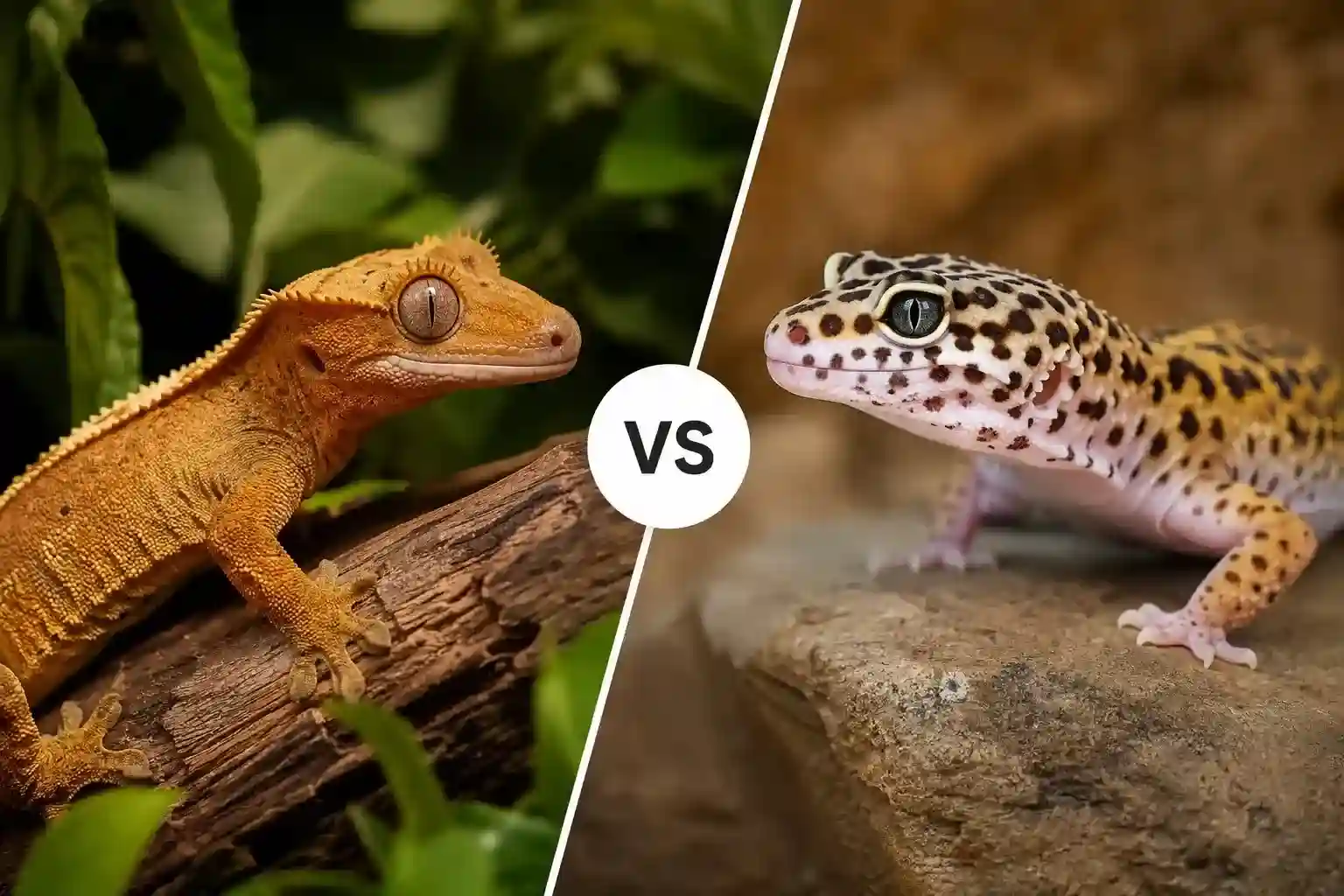
When you start researching a beginner reptile, you face a common choice: Crested Gecko vs Leopard Gecko. Both species stand out as the most popular pet lizards because they tolerate human interaction and have straightforward husbandry needs. They sit at the top of reptile beginner guides for good reason.
While both make good pets, their daily care routines look quite different. A crested gecko spends its time climbing glass walls in a vertical, humid enclosure and eats a convenient powdered diet. A leopard gecko stays on the ground in a dry, wide tank and relies entirely on live feeder insects.
This comparison is written for first-time keepers who need practical facts to choose between the two. We will explore the daily upkeep and the handling expectations for each species. By the end of this article, you will find a clear final recommendation based on specific owner types to help you pick the right gecko for your home.
Crested geckos and leopard geckos are both beginner-friendly reptiles, but they suit different owners. Crested geckos require higher humidity and eat prepared diets, while leopard geckos prefer drier habitats and live insects. The right choice depends heavily on your handling preferences and daily feeding comfort.
Crested Gecko vs Leopard Gecko at a Glance
Before diving into habitat setups or feeding schedules, a side-by-side comparison helps set clear expectations. Both species live roughly 15 to 20 years in captivity, yet their daily care requirements contrast sharply.
A crested gecko originates from the damp, tropical environment of New Caledonia. This background makes them an arboreal gecko, meaning they need tall tanks to climb. A leopard gecko comes from rocky, arid regions. As a terrestrial gecko, they stay on the floor of a wider desert enclosure.
Their feeding routines also differ. One relies heavily on a powdered complete gecko diet mixed with water, while the other eats only live insects. Handling tolerance varies as well. Leopard geckos tend to sit calmly in your hand. Crested geckos have a jumpy nature that requires more attention during handling sessions.
Another physical difference involves their tails. If a leopard gecko drops its tail due to stress, it grows a new one. A crested gecko will remain tailless for the rest of its life.
Table 1: Crested Gecko vs Leopard Gecko: Side-by-Side Overview
| Feature | Crested Gecko | Leopard Gecko |
| Native Habitat | Tropical | Arid |
| Activity | Arboreal | Terrestrial |
| Humidity | High (60–80%) | Low (30–40%) |
| Diet | CGD + insects | Insects |
| Handling | Moderate (Jumpy) | Excellent (Calm) |
| Tail Regrowth | No | Yes |
| Lifespan | 15–20 years | 15–20+ years |
| Beginner Friendly | Yes | Yes |
Appearance and Size Differences
When comparing a Crested Gecko vs Leopard Gecko, a reptile’s physical build changes how you interact with it daily. Both species reach similar adult lengths of 8 to 10 inches, yet their body structures serve different purposes. The crested gecko feels delicate and lightweight in your hand. The leopard gecko feels firm and grounded. Let’s explore the specific visual traits that separate these two popular pets.
What Does a Crested Gecko Look Like?
When you look at a crested gecko, the first thing you notice is the ridges above its eyes. These ridges resemble eyelashes. This feature gives the gecko a face that appeals to many owners. Below their feet, they possess sticky toe pads. These pads allow them to walk straight up the glass of their enclosure.
A healthy crested gecko feels soft to the touch. Their skin resembles velvet. They have a prehensile tail. They use this tail to grip branches while climbing. If a crested gecko drops its tail from fright, you are left with a tailless pet. The tail does not grow back.
What Does a Leopard Gecko Look Like?
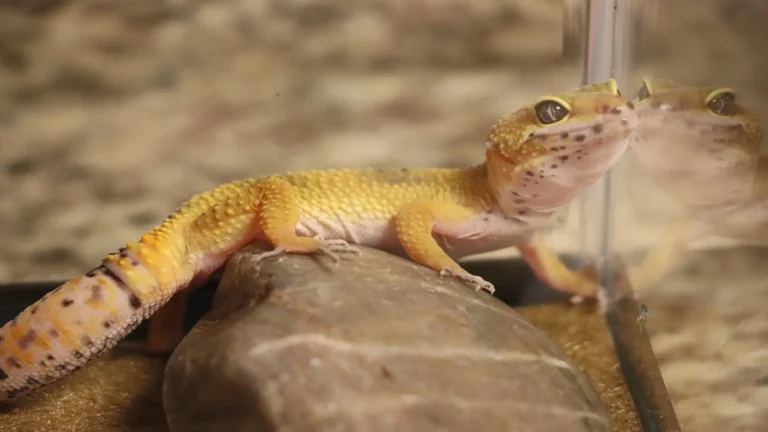
A leopard gecko has a lizard shape with a thick tail and sturdy legs. Their name comes from the spotted pattern covering their back. As a ground-dwelling reptile, they lack sticky toe pads. They have small claws designed for digging in dry dirt.
Unlike many other geckos, leopard geckos possess movable eyelids. You will see them blink or shut their eyes while sleeping. Their skin feels bumpy due to raised scales across their back. They store fat in their tail. A plump tail points to a well-fed pet.
Which Gecko Looks More Unique?
Visually, the choice is prehistoric crests versus desert patterns. The crested gecko offers a prehistoric look with its crests. The leopard gecko provides a desert aesthetic with numerous color mutations available from breeders. Both stand out as attractive pets for any room.
Temperament and Handling
Opening the enclosure door reveals the stark difference between these two pets.
Crested Gecko Personality
A crested gecko shows an active interest in its surroundings. When you open the terrarium, they might walk right onto your hand. Their curious nature makes them fun to watch in the evening.
Like most geckos, they are most active after dark and remain quiet, making them suitable for apartments and bedrooms.
Because they live in trees, they possess a strong instinct to leap. This means they can jump unexpectedly from your hand to your shirt or the floor.
This jumping habit makes them less predictable during handling sessions. You need to use a hand-over-hand walking technique. You place one hand in front of the other as they move. They do not enjoy sitting still for long periods. You will spend your time managing their movement rather than holding them stationary.
Leopard Gecko Personality
A leopard gecko operates at a different pace. They have a calm demeanor that puts new owners at ease. Although most active during the evening and night, they are often visible resting in the open during the day. Once a captive-bred gecko gets used to your scent, they tend to move with a steady walk.
This species shows excellent handling tolerance. A leopard gecko will gladly sit on your palm or rest on your lap to absorb your body heat. They rarely make sudden movements or attempt to run away.
Because of this relaxed nature, they are often recommended for children. A younger owner finds it easier to hold a pet that stays in one place. They offer a hands-on experience without the constant need to catch a fleeing animal.
Which Gecko Is Easier to Handle?
The leopard gecko is the clear winner in the handling category. Their grounded nature makes interaction stress-free for both the owner and the pet.
Safety considerations play a large role here. A jumping crested gecko risks a harmful fall to the floor. A startled crested gecko might also drop its tail.
A leopard gecko stays close to the ground and moves with predictable steps. If you want a pet to hold while sitting down, the leopard gecko fits that role. If you prefer watching an active pet, the crested gecko works better.
Habitat and Enclosure Requirements
Setting up a reptile terrarium forms the foundation of good pet care. Your maintenance routine depends on the environment you create.
Crested Gecko Setup
A crested gecko lives in the trees. This dictates the shape of your enclosure. You need a tall, vertical enclosure. A standard glass tank that stands taller than it is wide gives them room to climb and jump.
Inside the tank, you provide a network of climbing surfaces. Thick branches and cork bark tubes serve as their main pathways. They sleep hidden among leaves. Adding broad-leaf fake or live plants gives them places to rest out of sight during the day.
Maintaining a tropical enclosure brings a specific everyday task: humidity management. A crested gecko drinks water droplets off leaves. They rely on airborne moisture to shed their skin without issues. You will spend time each evening spraying the tank with water to meet their humidity requirements.
The glass walls will fog up after spraying. The soil holds moisture. You balance these wet evening periods with dry daytime periods to stop mold growth. This setup focuses on creating a dense, damp jungle inside your living room.
Leopard Gecko Setup
A leopard gecko stays on the ground. This requires a long, horizontal enclosure. Floor space matters much more than height for this terrestrial reptile.
Inside their desert enclosure, the focus shifts to hiding spots and floor temperatures. You build a temperature gradient. One side of the tank stays warm. The other side stays cool. You place a warm hide over a heat mat or under a heat lamp. The gecko spends time here to digest its food.
On the opposite end, you place a cool hide. This gives the gecko a place to retreat when they feel warm. They move back and forth between these zones to regulate their body heat.
A leopard gecko thrives in a dry environment. You do not mist the whole tank with water. Instead, you provide a small water bowl. You include one enclosed damp hide to help them shed, leaving the rest of the tank dry. This reptile setup resembles a rocky, arid landscape. The everyday upkeep focuses on sweeping up waste rather than managing moisture levels.
Which Setup Is Easier for Beginners?
Setting up a leopard gecko tank proves easier for first-time owners.
Managing a dry environment takes less everyday effort. Humidity challenges frustrate new crested gecko keepers. If you spray too much water, the tank grows mold. If you spray too little water, the gecko struggles to shed its skin.
Heating challenges present a different hurdle. A leopard gecko needs dedicated heat sources to establish a proper temperature gradient. A crested gecko thrives at average room temperature, needing no extra heat in standard homes.
When comparing overall reptile husbandry maintenance, the terrestrial dry tank wins. Wiping glass and scooping dry waste from a leopard gecko tank takes just a few minutes. Scrubbing hard water stains and managing the damp soil of a crested gecko enclosure requires a more hands-on routine.
Diet and Feeding Differences
Mealtime looks different for these two reptiles. What you bring home from the pet store changes based on which species you pick.
What Crested Geckos Eat
A crested gecko thrives on a complete gecko diet. This powdered diet comes in a bottle and takes seconds to prep. You just mix a spoonful with water into a fruit-flavored paste and serve it in a small plastic cup. The gecko licks this food from the cup during the night.
You have the option to offer live feeder insects a few days a week. Crickets give them a chance to hunt. This hunting behavior provides mental stimulation. Feeding insects remains optional if you use a quality powdered formula.
This crested gecko’s diet creates a strong convenience factor. You avoid keeping bins of live bugs in your home. The sealed powder stores neatly on a shelf for months.
What Leopard Geckos Eat
A leopard gecko relies entirely on live meat and cannot digest fruits or plant matter. To keep your reptile healthy, you need to practice gut-loading. This involves feeding fresh, nutrient-dense vegetables to the insects a day before offering them to your pet, allowing the gecko to absorb those hidden vitamins.
Relying on a single type of bug can cause a leopard gecko to lose its appetite. To maintain strong feeding responses, rotate a variety of insects. Crickets and mealworms work well for standard meals, while small hornworms offer hydration.
Since these terrestrial reptiles react to movement, dropping the live feeders into the enclosure with feeding tongs encourages their natural hunting instincts and provides necessary mental enrichment.
Which Gecko Is Easier to Feed?
The practical comparison relies entirely on your comfort level with insects. If storing live bugs in your house makes your skin crawl, the crested gecko is the obvious winner. Preparing their meal takes just one minute of mixing powder with water, and cleaning up requires nothing more than washing a small cup the next morning.
A leopard gecko demands regular trips to the pet store to restock live food. Maintaining them means spending extra time feeding and watering the feeder insects in their storage bins while clearing out the dead ones.
The final verdict favors the crested gecko. The formulated powder saves time and removes the daily chore of maintaining a separate insect colony in your living space.
Lifespan, Health, and Common Problems
Keeping a reptile for twenty years means preparing for its specific medical vulnerabilities.
Common Crested Gecko Health Issues
Keeping a crested gecko healthy means watching their moisture levels. If you forget to mist their tank, they suffer from dehydration. Their eyes might look sunken. Lack of moisture also causes shedding issues. Old skin gets stuck on their toes and tail tip. You need to monitor their humidity daily to prevent this.
Another issue relates to their enclosure setup. If they sleep upside down on flat glass, gravity pulls their heavy tail over their back. This causes Floppy Tail Syndrome, which bends their spine. You prevent this condition by providing plenty of horizontal branches and dense plants for resting spots.
Common Leopard Gecko Health Issues
Leopard geckos face different daily challenges. They store excess fat in their thick tails. If you feed them too many fatty worms, they develop obesity. A heavy reptile struggles to walk and experiences organ strain over time.
They also experience stuck shed, especially around their small toes. Providing a dedicated damp hide gives them the moisture needed to remove old skin.
Their skeleton requires calcium to stay strong. If you do not dust their feeder insects with calcium powder, they develop Metabolic Bone Disease. This condition softens their bones and bends their legs. You can prevent this by maintaining a consistent supplement routine.
Which Gecko Is Hardier?
Both species show strong resilience when you provide proper care. Labeling one as hardier requires looking at the environment you create.
A leopard gecko can adapt to the changing room temperatures. handles room temperature changes well. If your house gets cold at night, their natural desert background helps them cope. They forgive minor feeding delays because they rely on their tail fat reserves.
A crested gecko handles setup simplicity better. They do not need heat mats or basking lights to thrive. They eat a formulated powder that prevents severe diet deficiencies.
The balanced answer depends on your daily habits. If you dislike spraying water and managing humidity, the leopard gecko proves hardier. If you worry about maintaining warm temperatures and dusting live bugs, the crested gecko stands as the stronger pet.
Cost of Ownership
Bringing a pet into your home requires financial planning. Let us break down the cash you will spend on day one and the bills you will pay each month.
Initial Setup Costs
Your biggest purchase happens before you buy the reptile. A glass tank takes up the largest portion of your budget. A tall crested gecko terrarium and a long leopard gecko enclosure cost roughly the same amount at the pet store.
Heating creates the first price difference. A leopard gecko requires a heat mat or a heat lamp with a thermostat to stay warm. A crested gecko thrives at room temperature, saving you this initial equipment cost.
Decor adds up quickly. Buying climbing branches and fake vines equals the cost of buying rocky hides for a desert environment.
Ongoing Expenses
Food represents your main monthly bill. Buying complete gecko diet powder costs less than purchasing weekly batches of live insects. A single bottle of powder lasts a crested gecko for months. A leopard gecko eats through bins of crickets and mealworms.
Electricity costs also differ. Running a heat lamp for a leopard gecko adds a small amount to your monthly utility bill. A room-temperature setup draws no power.
Both geckos require supplements. You will buy calcium powder to dust the live bugs or mix into the paste. One bottle of calcium lasts a long time for both pets.
Which Gecko Is More Affordable?
For most basic beginner setups, a crested gecko is often slightly cheaper to maintain because it does not require regular live insect purchases and usually needs less heating equipment. You save money upfront by skipping heat lamps and thermostats.
Monthly feeding costs are often lower because a complete gecko diet lasts much longer than live feeder insects. For many new keepers, this gives the crested gecko a slight edge in overall affordability
Which Gecko Is Better for Beginners?
Making the final choice between a Crested Gecko vs Leopard Gecko depends on evaluating your daily routines. Both reptiles offer unique benefits that fit well into different home lifestyles, so you must match the pet to your comfort level.
Choose a Crested Gecko If…
A crested gecko fits well into specific home lifestyles.
- You dislike feeding insects daily: Mixing a powdered diet with water saves time. You avoid keeping bins of live bugs in your closet. You skip the chore of buying crickets every week.
- You enjoy planted terrariums: Building a vertical enclosure lets you use your creativity. You design a tall space with climbing branches, fake vines, and broad leaves that look like a piece of the jungle.
- You want a tropical setup: You do not mind spraying water each evening to maintain moisture. You prefer watching an active pet jump around rather than holding them on your lap.
Choose a Leopard Gecko If…
A leopard gecko aligns better with owners seeking a hands-on pet without complicated daily tank maintenance.
- You want easier handling: Their calm behavior makes them easy to hold. They stay close to the ground and move with predictable steps, making them a safe choice for younger owners.
- You don’t mind feeder insects: You feel comfortable dealing with live bugs. You have the patience to dust crickets with calcium powder and feed the insects before offering them to your pet.
- You prefer simpler environmental control: Managing a dry tank takes less everyday work. You plug in a heat lamp and let it run. You skip the daily water spraying routine and avoid damp soil.
Our Final Beginner Recommendation
Both reptiles earn their spots as top choices for new owners. The right pick depends on what you expect from pet ownership.
The leopard gecko wins for handling and environmental simplicity. If you want a pet that sits calmly on your hand and lives in a low-maintenance dry tank, this terrestrial lizard is your best match.
The crested gecko wins for feeding convenience and visual display value. If you want a striking tall terrarium in your room and prefer mixing powdered food over touching live bugs, this active climber fits your daily routine.
Evaluate your schedule and choose the pet that matches your comfort level.
Frequently Asked Questions
New owners have specific concerns before bringing a reptile home. Here are answers to the practical questions that arise when deciding between these pets.
Conclusion
The final decision in the Crested Gecko vs Leopard Gecko debate comes down to the daily environment you want to build. Both reptiles make rewarding pets. They adapt well to home terrariums and tolerate human interaction. They just need opposite setups.
A crested gecko requires a tall enclosure and a powdered diet. This species appeals to owners who enjoy planted terrariums and want to avoid live bugs. You will spend your evenings spraying water to maintain moisture.
A leopard gecko needs a long floor layout and a steady supply of live insects. This grounded lizard suits owners who prioritize calm handling. You will spend your time managing a heat gradient in a dry tank.
Review your daily schedule to pick the routine that matches your comfort level. If you want to build a tropical setup, read our comprehensive [Crested Gecko Care Guide] to start planning your terrarium. If you prefer the desert route, explore our detailed [Leopard Gecko Care Sheet] to learn about proper heating and insect feeding schedules.
References
- Crested Gecko Care Guide: Setup, Diet, and Handling. https://pawshatch.com/crested-gecko-care-guide/
- Leopard Gecko Care Guide: Tank Setup, Diet, Lifespan & Beginner Tips. https://pawshatch.com/leopard-gecko-care-guide/
- Bonaci. L. (2023). Non-infectious diseases of captive reptiles. University of Veterinary Medicine, Budapest.
- Gauthier C., & Lesbarreres. D. (2010). GROWTH RATE VARIATION IN CAPTIVE SPECIES: THE CASE OF LEOPARD GECKOS, EUBLEPHARIS MACULARIUS. Herpetological Conservation and Biology 5(3):449–455.
- Stacey Leonatti Wilkinson, DVM, DABVP. (Reptile and Amphibian). COMMON MEDICAL CONDITIONS OF CAPTIVE REPTILES. Avian and Exotic Animal Hospital of Georgia Pooler, GA, USA.