
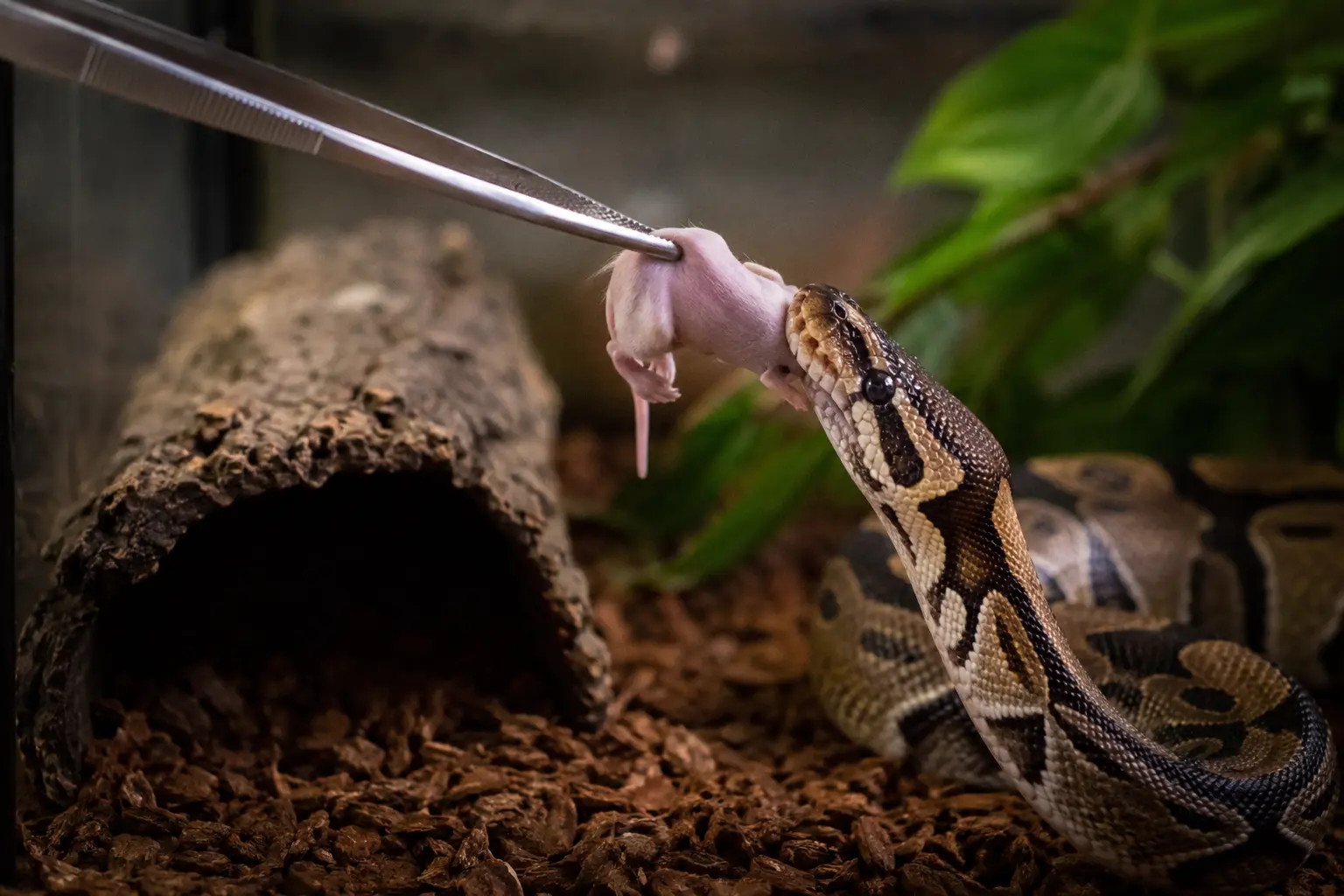
Feeding a snake can feel intimidating for first-time keepers. Standing over a glass enclosure with a thawed rodent on tongs requires a physical adjustment. You watch the reptile track movement through the glass, unsure of the right approach or timing. Early mistakes result in refused meals, wasted rodents, or physical digestion issues down the line.
Learning how to feed a ball python removes the guesswork from this routine. A structured approach creates a safe, stress-free feeding method for the owner and the animal. The reptile receives consistent, measured nutrition without the risk of physical injury.
Mastering how to feed a ball python properly requires specific adjustments to your husbandry habits. Owners need a strict schedule based on the snake’s exact age and current mass. Selecting the right prey size prevents mid-meal rejection or later regurgitation. Correct preparation involves bringing the rodent to the right body temperature and presenting it with tongs to trigger a strike. Recognizing common mistakes early prevents long-term fasting periods. Practical adjustments to the routine maintain consistent, predictable eating habits.
While proper nutrition is critical, a structured feeding routine is just one component of a complete ball python care guide. A safe, stress-free feeding method depends heavily on having your terrarium temperatures and overall husbandry dialed in correctly.
Feed a ball python an appropriately sized frozen-thawed rodent every 5–14 days, depending on age and body condition. Prey should be roughly the same width as the snake’s widest body section, and handling should be avoided for 24–48 hours after feeding.
What Do Ball Pythons Eat?
Before you learn how to feed a ball python, you must first understand their exact nutritional requirements. In their natural habitat, ball pythons are ambush predators that live entirely on small mammals. A standard diet revolves around mice and rats.
Wild pythons hunt based on chance, taking whatever prey they can catch. When figuring out what ball pythons eat in captivity, owners mimic a mammal-based diet while removing the unpredictability. Instead of random, potentially parasite-ridden meals, captive snakes get clean, size-matched rodents on a predictable schedule.
New owners sometimes wonder about grocery store alternatives. You cannot feed a snake raw chicken, beef cuts, or insects. These reptiles require whole prey nutrition to survive. A whole rodent provides every nutrient a snake requires:
- Bones: Supply necessary calcium for physical growth.
- Organs: Deliver essential vitamins and minerals.
- Fur: Acts as roughage, pushing waste matter through the digestive tract.
Digesting the entire animal prevents nutritional deficiencies and ensures a healthy, consistent shed cycle.
Frozen vs Live Feeding – Which Is Better?
A major consideration in how to feed a ball python safely is the debate between live and frozen prey, and new owners often hear conflicting advice at reptile expos regarding this topic. Some breeders insist that snakes require live prey to maintain their hunting instincts. This claim misleads beginners. In captivity, a feeding response relies on heat and scent, not the fight of a live animal.
Veterinary professionals and experienced keepers recommend frozen-thawed rodents. Pre-killed prey eliminates the chance of physical combat inside the enclosure. You purchase a bulk supply, store it in the freezer, and thaw individual meals on schedule.
Dropping a live rat into a confined glass box creates a dangerous scenario for your pet. If the python refuses to strike right away, the rodent gets defensive.
- Bites and Scratches: A cornered rat will bite a snake’s face, eyes, or spine.
- Severe Infections: Rodent teeth carry bacteria, turning minor scratches into severe medical emergencies.
- Enclosure Damage: Left unattended, a panicked rodent will chew through foam backgrounds and plastic hides.
Keepers only resort to live feeding during specific rescue situations. If an imported or neglected python refuses pre-killed meals for months and loses drastic body mass, a supervised live meal acts as a last resort. Owners must monitor the entire interaction with tongs in hand, ready to intervene.
If you are a beginner, frozen remains the safest choice.
How Often to Feed a Ball Python
Knowing how to feed a ball python correctly is just as important as knowing exactly when to offer meals. Reptiles process meals at a different pace than mammals. A ball python’s feeding schedule relies on the animal’s current age, weight, and metabolism. Offering food too often leads to severe obesity, while waiting too long stunts physical development.
Feeding Schedule by Age
Owners must adjust meal frequency as the animal matures. Younger snakes require rapid calorie intake to support bone and muscle growth. Full-grown adults maintain their mass with spaced-out meals.
- Hatchlings (Under 6 months): Feed every 5 to 7 days.
- Juveniles (6 to 12 months): Space meals out to every 7 to 10 days.
- Adults (Over 1 year): Offer a rodent every 10 to 14 days.
Pro Tip: Keep a notebook near the terrarium to log feeding dates. This prevents accidental overfeeding if you forget the date of the last meal.
Signs Your Snake Is Hungry
Reptiles display specific physical cues when searching for a meal. Recognizing these behaviors helps owners confirm a strong feeding response and optimal health.
- Increased activity: The snake leaves its hide during daytime hours and begins prowling the terrarium perimeter.
- Tongue flicking: Rapid, continuous tongue flicks indicate the animal is gathering scent particles from the air to locate prey.
- Watching enclosure movements: The python tracks shadows or the owner’s movements near the glass, anticipating food.
Choosing the Right Prey Size
Selecting the correct rodent prevents severe digestive problems. The primary rule for snake keepers relies on a basic visual measurement. The feeder rodent must equal the exact width of the thickest part of the snake’s mid-body. Owners reference a ball python prey size chart to confirm their visual estimates before purchasing a bulk supply of frozen rats or mice.
Ball Python Prey Sizing Guide by Weight
Weigh your snake using a digital scale, then use this chart to find the exact rodent size and target weight ratio required for their current growth stage.
Table 1: Ball Python Prey Sizing Guide by Weight
| Snake Age / Stage | Snake Weight (Grams) | Recommended Rodent Type | Rodent Weight (Grams) | Target % of Body Weight |
| Hatchling | Up to 200g | Hopper Mouse or Rat Pup | 10g – 20g | 10% – 15% |
| Juvenile | 200g – 500g | Weaned Rat | 30g – 45g | 10% – 15% |
| Sub-Adult | 500g – 1,000g | Small Rat | 50g – 80g | 7% – 10% |
| Adult | 1,000g – 1,500g+ | Medium Rat | 90g – 150g | 5% – 7% |
Offering incorrect sizes creates distinct, observable health hazards for your pet.
- Regurgitation: Swallowing a rodent too large forces the snake to expel the meal days later. This traumatic physical event damages the throat and strips essential stomach acids.
- Obesity: Providing excessive calories through oversized prey creates noticeable fat pockets near the tail and along the lower spine.
- Stunted Growth: Underfeeding starves the reptile of required nutrients. Undersized meals result in poor muscle tone, a compromised immune system, and a sharp, triangular body shape instead of a healthy, rounded build.
Essential Feeding Equipment
Standardizing your feeding routine requires a few specific tools. Using the correct hardware protects both you and the snake from accidental injury while ensuring the rodent is prepared safely.
- Feeding Tongs: Most keepers use 10–12-inch feeding tongs to maintain a safe distance during feeding. (preferably with rubber-coated tips). Anything shorter than 10 inches places your fingers inside the snake’s thermal strike zone.
- Digital Scale: A flat-surface digital kitchen scale accurate to 1 gram. Bowl attachments are highly recommended for weighing squirmy hatchlings safely.
- Thermal Verification: An infrared temperature gun. The surface of the thawed rodent’s head must read between 98°F and 100°F (36.6°C – 37.7°C) to mimic a live mammal perfectly and trigger a strike.
Step-by-Step Guide on How to Feed a Ball Python
A predictable routine guarantees a positive feeding response. Follow these exact steps to ensure a secure, successful meal for your reptile.
Step 1 – Prepare the Food
Thaw the frozen rodent before the scheduled meal. Place the rodent inside a watertight bag and submerge it in warm water. Bring the prey to the correct body temperature. Snakes rely on heat pits to locate food. Offering a cold rodent results in a refused meal.
Step 2 – Use Feeding Tongs
Never offer food with bare hands. Avoid hand feeding to prevent painful, accidental bites. Snakes possess poor eyesight and strike at heat signatures instead of visual targets. Always use stainless steel feeding tongs to create a safe distance between your fingers and the strike zone.
Step 3 – Present the Prey
Grip the rodent by the scruff of the neck with the tongs. Lower the prey into the terrarium and mimic natural movement. Wiggle the rodent near the substrate. This motion triggers the feeding response, prompting the python to strike and constrict the meal.
Step 4 – Let Your Snake Eat in Peace
Once the snake wraps the prey, step back and close the enclosure door. Allow the reptile to swallow the meal uninterrupted. Enforce a strict rule of no handling after feeding for a full 24 to 48 hours. Moving the snake during this digestion window causes physical stress and induces regurgitation.
How to Thaw Frozen Rodents Safely
A crucial part of how to feed a ball python involves strict temperature control during meal preparation. Understanding how to thaw frozen mice for snakes protects the reptile from harmful bacteria and thermal burns. Proper preparation ensures a safe meal and a strong feeding response.
Safe Rodent Thawing Times by Prey Size
Refer to this matrix to determine the exact refrigeration and warm water soaking times needed to safely prepare your specific size of feeder rodent without risking bacterial growth.
Table 2: Safe Rodent Thawing Times by Prey Size
| Rodent Size | Step 1: Refrigerator Thaw (Overnight) | Step 2: Warm Water Bath (In a sealed bag) | Target Core Temp Before Feeding |
| Mice / Rat Pups | Optional, but recommended | 10 – 15 Minutes | Soft core, 98°F surface |
| Weaned Rats | 12 Hours | 20 – 30 Minutes | Soft core, 98°F surface |
| Small Rats | 24 Hours | 30 – 45 Minutes | Soft core, 98°F surface |
| Medium Rats | 24 Hours | 45 – 60 Minutes | Soft core, 98°F surface |
Owners adhere to a set protocol to prevent medical emergencies:
- Never microwave: Appliances create dangerous internal hot spots. Microwaves cook the organs and cause the rodent to rupture when the snake constricts.
- Use the warm water method: Place the frozen prey inside a watertight plastic bag. Submerge the sealed bag in a bowl of warm water to thaw the meal.
- Ensure proper internal thawing: Squeeze the thickest part of the rodent’s belly before feeding. Confirming the center is soft guarantees proper internal thawing. A frozen core lowers the python’s internal temperature and halts digestion.
Why Your Ball Python Is Not Eating
Even when you know exactly how to feed a ball python, a refused meal can cause concern for new reptile owners. However, a feeding strike occurs as a standard part of snake husbandry. Understanding the root cause of these breaks prevents wasted effort and helps you take the correct action.
Common Reasons
Reptiles stop accepting meals for distinct, observable reasons. Owners must evaluate these specific factors when a meal gets rejected.
- Stress: A new enclosure setup, frequent handling sessions, or heavy foot traffic near the glass terrarium disrupts the animal’s sense of security. A stressed python stays curled in its hide and ignores food to prioritize safety.
- Shedding cycle: As the scales turn dull and the eyes cloud over, the snake enters a vulnerable state. The reptile loses its appetite and rejects all meals until the old skin peels off.
- Incorrect temperature: Proper digestion relies on a specific thermal gradient. If the warm side of the enclosure drops below the required 88 to 92-degree range, the reptile stops eating to prevent the rodent from rotting inside its stomach.
- Seasonal fasting: Adult pythons take natural breaks from food during cooler months. This winter fasting instinct remains strong even inside temperature-controlled rooms.
What You Should Do
When facing a prolonged fast, owners need to follow a measured, objective approach rather than making drastic changes.
- Check enclosure conditions: Verify your digital thermometers and thermostats first. Ensure the primary heat source provides the precise surface temperature required for digestion. Confirm the hides offer tight, dark spaces.
- Avoid force-feeding: Pushing a rodent into a snake’s mouth causes severe physical trauma and damages the throat lining. This invasive measure remains a last-resort medical procedure performed by trained exotic veterinarians.
- Be patient: Track the animal’s body mass using a digital kitchen scale every two weeks. A healthy adult python survives weeks or months without a meal without showing visible spine ridges. Continue offering a thawed, heated rodent on your normal schedule. If the snake refuses the meal, remove the prey the next morning and wait for the next scheduled feeding day.
Feeding Mistakes to Avoid
New owners disrupt the feeding cycle through preventable errors. Avoiding these specific mistakes maintains the reptile’s health and ensures consistent eating habits.
- Feeding prey too large: Offering rodents wider than the snake’s mid-body causes physical trauma and forces regurgitation.
- Handling after feeding: Moving the reptile within 48 hours of a meal interrupts digestion and induces stress.
- Feeding too often: Providing meals ahead of the standard schedule leads to rapid weight gain and severe obesity.
- Using unsafe thawing methods: Preparing frozen rodents in a microwave creates dangerous internal hot spots.
- Leaving live prey unattended: A live rat left alone inside the glass enclosure will bite and cause severe physical injury to the snake.
- Offering cold rodents: Failing to bring the thawed prey to proper body temperature results in an ignored meal, as the python cannot detect the required heat signature.
- Moving the snake to feed: Transferring the python to a separate plastic tub creates unnecessary stress and increases the risk of regurgitation during the return trip to the primary terrarium.
Feeding Tips for First-Time Owners
Perfecting how to feed a ball python takes a little practice and reliable data. Establishing clear husbandry habits builds a secure environment for your reptile. Predictable practices reduce stress and encourage a strong feeding response.
- Keep a feeding log: Track the exact date, the size of the rodent, and whether the snake struck or refused the meal. Keeping a physical notebook near the terrarium provides a permanent record of the animal’s eating habits. This data proves vital if you need to consult an exotic veterinarian.
- Stick to routine: Offer meals on the exact same day of the week. Reptiles thrive on predictable cycles. Evening feedings align with their nocturnal activity patterns. Approaching the enclosure after sunset results in a quicker strike and a smoother digestion process.
- Monitor weight and behavior: Place the snake inside a plastic tub on a digital kitchen scale every four weeks to log its exact mass. Visual assessments fail to detect minor drops in body weight. Consistent weigh-ins provide objective data regarding the animal’s physical development and overall health.
- Don’t panic during fasting periods: Healthy pythons take natural breaks from their diet. Instead of forcing a meal, rely on the data from your digital scale. A snake maintaining its body mass faces no danger during a temporary fast.
FAQs About Feeding Ball Pythons
Even with a strict routine, unique scenarios can leave new keepers second-guessing their approach. Here are clear, objective answers to the most common questions about a ball python’s diet.
Final Thoughts
Learning how to feed a ball python requires a short physical adjustment period for new keepers. Once you get the hang of it, providing meals becomes a standard, predictable part of your regular husbandry routine.
Success relies on objective data and consistent habits. Track your pet’s body mass on a digital scale, stick to a rigid feeding schedule based on age, and present properly thawed rodents using stainless steel tongs. Removing the guesswork from this process ensures your python maintains optimal health without risking physical injury.
A strong feeding response depends heavily on precise environmental factors. If your pet refuses meals despite following these steps, evaluate the enclosure. Review our core resources on ball python habitat setup and our reptile temperature and humidity guide to confirm your terrarium meets the exact thermal requirements for healthy digestion.
References:
- 1. Conference paper: Proceedings of the NAVC Conference, 16-20 January 2016, Orlando, Florida, USA. Volume 30, Small Animal and Exotics, 2016, 1508-1511 https://www.cabidigitallibrary.org/doi/pdf/10.5555/20163321493 accessed
- https://pawshatch.com/how-to-feed-a-ball-python/