
Bringing home a new ferret reveals a distinct cycle of energetic playtime followed by deep sleep. That constant shift points to a fast metabolism. Because these pets process meals at a rapid pace, providing the right food makes a significant difference in their daily well-being. When researching what do ferrets eat, the direct answer stems from their status as an obligate carnivore. They rely on meat to function.
The ferret digestive tract handles animal protein with ease but cannot process plant matter. Feeding meals built on the wrong ingredients places stress on their system. This dietary stress leads to health problems later in life, such as insulinoma. Proper meals supply essential nutrients like taurine to maintain their health over time. For a complete understanding of their overall management, review our comprehensive Ferret Care Guide.
Sorting through pet store options takes a little practice. Properly balanced kibble, raw meat, or whole prey protects their longevity. This guide details the practical steps of feeding these companions well without the guesswork.
Quick Answer: What Do Ferrets Eat?
When asking what do ferrets eat, the answer centers on meat. As an obligate carnivore, a ferret relies on animal protein and fat to survive. Plant matter offers little nutritional value. Keeping items like fruits or vegetables out of the food bowl prevents stomach issues.
When figuring out what food do ferrets eat on a daily schedule, prioritize animal sources. A dedicated commercial kibble provides a practical path. Checking the bag ensures poultry or beef sits at the top of the ingredient list. Bypassing brands that use corn or grains to boost protein numbers protects their digestion.
A raw diet serves as another option. Serving fresh muscle meat alongside organs satisfies a natural carnivore. Buying commercial frozen packages or preparing portions at home meets their daily requirements.
When deciding what ferrets should eat, focus on concentrated fats and proteins. Reading the back of the package separates quality meals from cheap fillers. Maintaining a consistent, meat-based routine gives them steady energy for playtime while keeping the litter box predictable.
Understanding a Ferret’s Unique Digestive System
Watching a ferret bound toward the food bowl highlights their fast metabolism. Understanding the ferret digestive system clarifies why their meals require specific planning. Many owners often ask, “Are ferrets carnivores?” Their internal mechanics process food at a rapid pace, relying entirely on animal-based sources to maintain daily energy and long-term health.
The 3-Hour Transit Time
Food moves from the food bowl to the litter box at a rapid pace. The entire transit time takes about three hours. This high-speed metabolism means the body extracts nutrients before passing the waste.
A person observing their companion will notice frequent trips to the food dish throughout the day. They eat small amounts to keep their energy levels stable.
Because the food stays in their system for such a short duration, the meals must be nutrient-dense. Feeding low-quality meals means the food exits the body before the animal absorbs adequate energy. This results in lethargy and frequent hunger. High-quality meat ensures the short processing window captures the required fuel for playtime.
Why Ferrets Cannot Digest Plant Matter
When deciding what to feed, people sometimes wonder why ferrets can’t eat vegetables. The reason is structural. They lack a cecum, the specific part of the digestive tract responsible for breaking down complex fibers. Without a cecum, plant matter passes through undigested and provides little nutritional value.
Furthermore, their bodies lack the necessary enzymes to process complex carbohydrates. Feeding plant material acts as an empty filler that offers no sustained energy. Ferrets are unable to efficiently utilize plant matter, making vegetables unsuitable for regular feeding. This lack of processing capability makes plant-based ingredients useless.
Why Carbohydrates Become a Problem
A diet heavy in plant-based ingredients creates ongoing internal stress. Carbohydrates cause unnatural spikes in blood glucose. The pancreas works overtime to produce enough insulin to manage these spikes. This constant demand leads to insulinoma, a condition involving tumors in the pancreas that overproduce insulin.
A pet suffering from insulinoma faces lethargy and requires ongoing veterinary intervention. Sticking to animal proteins avoids this pancreatic strain. Meat provides steady energy without causing the dangerous blood sugar fluctuations tied to carbohydrate-rich kibble.
Veterinary Perspective
Clinical observations show that chronic exposure to carbohydrate-heavy diets is frequently associated with insulinoma, one of the most common endocrine diseases seen in pet ferrets.
Essential Amino Acids Ferrets Need
Meat provides specific nutrients that these pets cannot synthesize on their own. Taurine supports heart function and vision. A lack of taurine leads to cardiovascular issues over time.
Arginine serves another vital role. It prevents the buildup of ammonia in the blood by facilitating the conversion of protein waste into urea. Without arginine, ammonia toxicity occurs.
Animal protein provides the exact concentration of these amino acids required to keep the body functioning. Relying on muscle meat and organs guarantees the ferret receives these crucial building blocks for a healthy life.
Nutritional Requirements Every Ferret Needs
Reading animal food labels takes a bit of practice. Meeting the daily ferret nutrition requirements means going beyond the marketing on the front of the bag and checking the guaranteed analysis panel. When owners review what do ferrets eat to meet these requirements, they find a balance focused entirely on meat. A glance at the label reveals whether the product provides the right fuel.
- Protein (35-40%): When asking how much protein do ferrets need, the target sits between 35% and 40%. This must originate from animal sources to ensure proper bioavailability. Plant proteins inflate the numbers on the bag but have minimal nutritional value.
- Fat (15-20%): The ideal fat percentage ranges from 15% to 20%. These pets burn fat as their primary energy source. Checking the label for poultry or beef fat guarantees they get the fuel needed to maintain a thick coat.
- Fiber (Under 3%): A guaranteed analysis showing fiber content under 3% indicates the manufacturer avoided cheap plant fillers to bulk up the bag.
- Carbohydrates (Under 5%): Most bags omit this percentage. Finding this hidden number requires subtracting the main guaranteed analysis figures from 100. Keeping carbohydrates under 5% prevents feeding starches that offer no energy value.
- Vitamins and Minerals: The ash content listed on a label represents mineral support. A reliable food shows an ash level of around 7%. This indicates adequate mineral support without relying on poor-quality bone meal.
Table 1: Recommended Nutrient Levels for Ferrets
| Nutrient | Ideal Range | Avoid Above/Below | Why It Matters |
| Protein | 35% – 40% | Below 30% | Supports muscle maintenance. |
| Fat | 15% – 20% | Below 15% | Delivers primary energy. |
| Fiber | Under 3% | Above 3% | Indicates excessive plant fillers. |
| Carbohydrates | Under 5% | Above 5% | Prevents unnecessary stress. |
| Ash | 7% | Above 8% | Represents mineral content. |
Best Foods for Ferrets: Kibble, Raw, and Whole Prey
Finding the best food for ferrets requires a little search. Ferret owners want to provide meals that keep their companion active and healthy. The market offers a few main paths for daily feeding. Deciding between dry food bags and fresh meat changes the daily routine. Using a trusted ferret’s diet guide helps evaluate the choices and find a practical solution that fits their schedule.
High-Quality Kibble
A commercial ferret kibble offers convenience for busy households. When picking up a bag, checking the ingredient list is the first step. A common guideline is the “First 5 Ingredients” rule. The top five items listed on the back of the bag need to be meat-based. Seeing chicken meal or duck at the top of the list shows the product focuses on the right fuel.
Brands like Marshall and Wysong provide formulas tailored to these specific needs. People also find good options from lines like Oxbow and Instinct.
Avoid bags that rely heavily on corn, peas, or other plant ingredients near the top of the ingredient list. Providing dense energy for their waking hours keeps them active. A good kibble leaves the ferret feeling full and reduces constant trips to the food dish.
The Raw Meaty Bones (RMB) Approach
Preparing a raw diet for ferrets requires more effort but brings distinct benefits. The raw meaty bones approach involves offering fresh muscle meat alongside edible bones. Chewing through these items scrapes plaque from their teeth. This physical effort provides solid mental stimulation.
Observing a ferret tackle a raw meal reveals the focused effort involved in chewing and consuming it. A proper raw routine needs specific ratios of meat to organs to maintain balance. Handling raw meat is basically practicing good kitchen hygiene. Many owners report improvements in coat quality and dental condition when raw diets are properly balanced.
Whole Prey Feeding
Feeding a whole prey diet represents the gold standard of biology-based feeding. This involves providing intact feeder animals like mice or chicks. A whole prey item delivers all the required nutrients in one natural package. There is no guessing about vitamin ratios or protein percentages. It replicates the exact meals they consume in a natural setting.
Whole prey diets require access to reputable frozen feeder suppliers to stock your freezers. Managing a whole prey routine requires dedicated freezer space. Some find the visual aspect challenging. For those willing to manage the logistics, this method closely mimics the natural composition of prey and provides excellent nutritional balance.
How to Switch Foods Safely
Changing a daily routine requires a phased approach. A sudden switch to a different brand causes stomach upset. Bringing a new food home means mixing it with the current meals over two weeks.
Start with a mix of old kibble and a small pinch of the new option. Increase the new portion every few days. This gradual transition lets their system adjust to the new protein source. Taking a steady approach prevents messy litter boxes. Patience ensures the pet accepts the new food without a fuss.
Veterinary Perspective
Veterinarians generally recommend choosing one nutritionally complete approach and maintaining consistency rather than frequently switching foods.
Table 2: Kibble vs Raw vs Whole Prey Comparison
| Feeding Method | Advantages | Challenges | Best For |
| High-Quality Kibble | Convenient to store and serve. | Finding options without plant fillers. | Owners need a practical daily routine. |
| Raw Diet | Promotes clean teeth and better coats. | Requires strict ratio planning. | Owners willing to prepare meals from scratch. |
| Whole Prey | Nutritionally complete. | Sourcing feeder animals. | Owners wanting the biological gold standard. |
What Human Foods Can Ferrets Eat?
Sharing a snack during the evening routine feels like a nice bonding moment. Many owners wonder what do ferrets can safely eat from the human pantry. Because their dietary needs rely on meat alone, the typical household pantry offers little value. A safe treat means skipping the processed snacks and looking directly at fresh protein.
- Safe Options: Preparing dinner brings up questions like can ferrets eat chicken or can ferrets eat eggs. Plain, unseasoned cooked meat serves as a perfect reward. Offering a raw egg yolk once per week provides a natural source of Biotin. A few drops of salmon oil deliver Omega-3 fatty acids. Plain freeze-dried meat provides a convenient option for quick rewards during play.
- Human Foods to Avoid: The safe list ends with unseasoned meat. Sharing processed deli meats introduces dangerous levels of salt. Items cooked with garlic or heavy cooking oils lead to severe sickness. Sugary snacks and baked goods cause serious harm to their system. Sticking to plain animal products ensures snack time remains safe.
Table 3: Safe and Unsafe Human Foods for Ferrets
| Food | Safe? | Frequency | Notes |
| Raw egg yolk | Yes | Once per week | Provides Biotin for the coat. |
| Plain cooked meat | Yes | Occasional treat | Must remain unseasoned. |
| Salmon oil | Yes | A few drops weekly | Delivers Omega-3 fatty acids. |
| Freeze-dried meat | Yes | Small amounts | Great for training rewards. |
| Sugary snacks | No | Never | Harmful to their system. |
| Seasoned deli meats | No | Never | Salt and spices cause illness. |
Why Some Ferrets Are Extremely Picky Eaters
Observing a ferret sniff a fresh bowl of premium kibble and walk away leaves owners wondering why their ferret is picky. A ferret won’t eat new food just because it sits in their dish, as their brains wire food recognition in a distinct way during youth. Understanding this early developmental phase helps resolve stubborn mealtime standoffs without the frustration of wasting expensive bags of food.
The Six-Month Imprinting Window
The timeline for establishing a palate is quite rigid. Food imprinting in ferrets occurs during the first six months of life. During this development phase, they rely on olfactory imprinting to categorize what qualifies as a safe meal.
Their brains link specific textures to sustenance. They memorize the exact smell and taste of their daily meals. Once this window closes, their olfactory memory locks in.
Bringing home an older animal from a shelter means inheriting their established preferences. If an owner tries introducing a different brand, the new companion refuses to recognize the unfamiliar scent as edible. It registers as a foreign object rather than dinner.
Soupies Strategy
Bypassing this stubbornness requires creativity. Ferret keepers use soupies to bridge the gap between familiar and new meals. Creating soupies involves soaking the new dry kibble in warm water and mashing it into a soft paste. The texture change makes the meal feel less intimidating.
Adding a few drops of salmon oil encourages them to take that first lick. The appealing scent of the oil masks the unfamiliar profile of the new food. Over several weeks, the person preparing the meal reduces the water content. The paste thickens in stages until the ferret accepts the standard dry version of the new diet.
Veterinary Perspective
Ferrets experiencing illness often stop eating quickly, which is why many exotic veterinarians encourage owners to train healthy ferrets to accept soft food early in life.
Smell-Mapping Techniques
Changing a ferret’s perception of a new food requires persistence. Smell-mapping techniques introduce the new scent in non-threatening ways. A person rubs a tiny bit of the new kibble or paste on the pet’s gums.
This gentle action forces them to register the taste. Placing a few pieces of the new kibble inside their favorite sleeping hammock also helps. The constant ambient exposure normalizes the scent in their living space. The unfamiliar item stops being a threat and becomes an accepted part of their daily routine.
Feeding Schedule by Age
Setting up a daily feeding routine depends on the pet’s current life stage. Figuring out how often and what do ferrets eat requires looking at their daily activity levels. A young ferret bounding across the room needs a different approach than an older companion taking long afternoon naps. Adjusting the bowl size and meal frequency keeps them in good shape throughout the years.
Baby Ferrets
Managing baby ferret feeding involves keeping up with constant energy. Kits grow at a rapid pace and burn through calories fast. They require an ad-libitum approach. This means leaving a full bowl of food available at all times. A kit will make countless trips to the dish to fuel their active playtime.
Adult Ferrets
Transitioning to adult ferret feeding brings a predictable routine. An adult ferret needs regular access to their meals. Free-feeding kibble remains the standard practice for busy households. Ferrets on raw diets generally eat into two separate meals served morning and night.
Senior Ferrets
An energy shift happens as the years pass. Proper senior ferret feeding focuses on weight management. A senior ferret spends more time sleeping and requires fewer calories to get through the day. Monitoring their overall weight prevents obesity. They still need consistent access to their bowl to maintain muscle mass.
Table 4: Ferret Feeding Schedule by Age
| Life Stage | Meals Per Day | Protein Needs | Special Considerations |
| Kit | Constant access | High | Support rapid physical growth. |
| Adult ferret | Constant access, or two raw meals | High | Monitor portions to prevent weight gain. |
| Senior ferret | Constant access | High | Adjust for lower daily activity. |
Hydration and Water Bowls
Observing your pet eat dry kibble pinpoints the daily need for proper fluids. Any complete ferret’s diet guide must emphasize this requirement. The delivery method impacts their comfort, sparking the common water bottle vs bowl for ferrets debate whenever owners set up a new cage.
Why Water Bottles Are Not Ideal
Hanging a drip bottle on the side of the cage seems like a neat solution. Seeing a pet standing on their hind legs licking a metal tube is a familiar sight. This specific setup restricts proper water intake.
A pet becomes frustrated trying to quench their thirst one single drop at a time and walks away before drinking enough. This limited access may contribute to dehydration. Biting down on the metal nozzle also damages their teeth, creating ongoing dental health issues.
Veterinary Perspective
Chronic mild dehydration and dental trauma are common concerns in ferrets that rely exclusively on drip bottles.
Why Heavy Ceramic Bowls Work Better
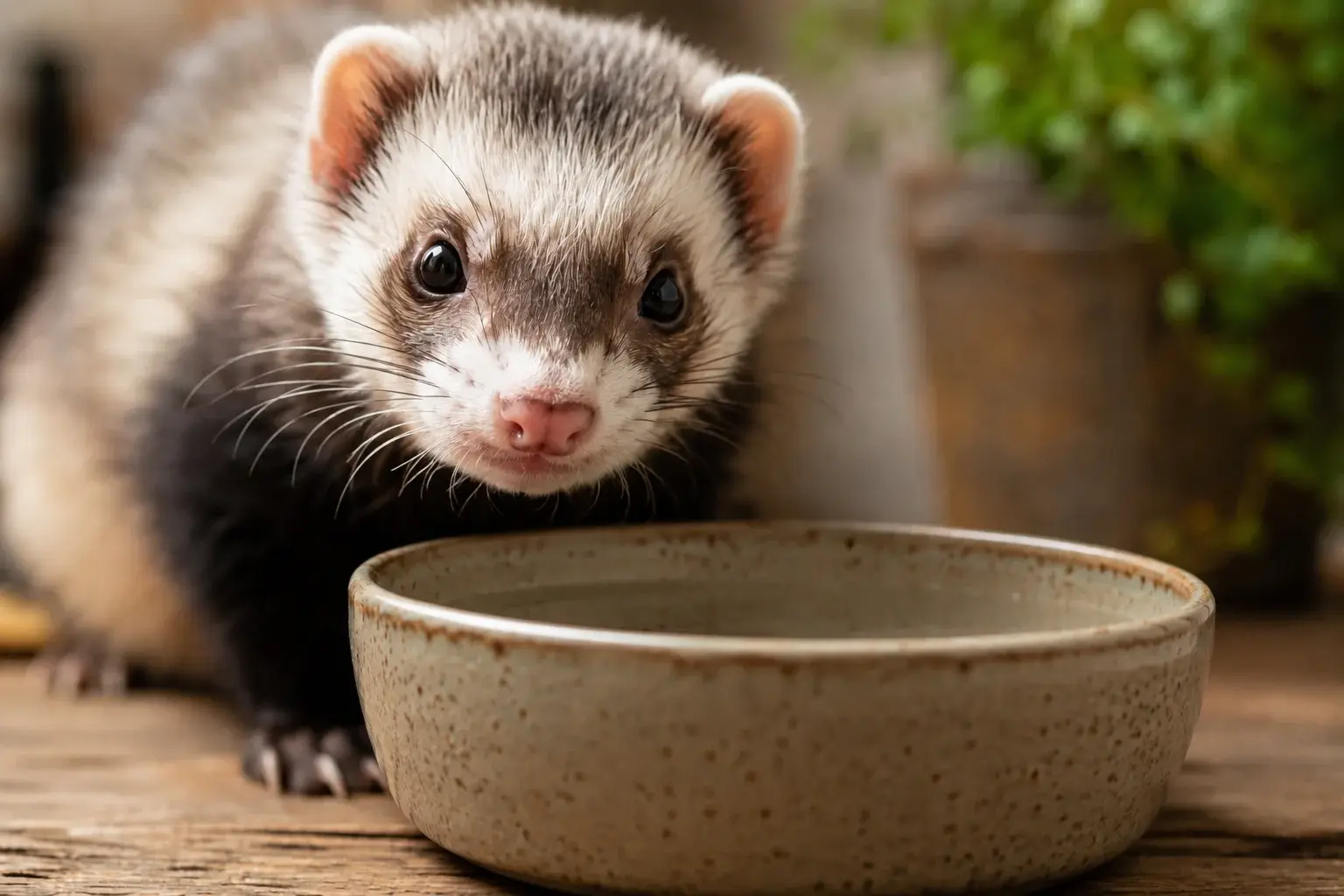
Switching to a dish solves these drinking problems. A heavy ceramic bowl resting on the cage floor provides open access. The solid weight prevents the ferret from tipping the dish over and soaking their bedding during an energetic digging session.
Lapping water from a dish mimics their natural drinking behavior. This unrestricted access ensures they consume adequate fluids to flush toxins and support their Kidneys. Washing and refilling the ceramic bowl each morning keeps their living space clean and safe.
Chronic mild dehydration and dental trauma are common concerns in ferrets that rely exclusively on drip bottles.
Common Foods Ferrets Should Never Eat
Keeping a pet safe requires knowing which items to keep out of reach. Understanding exactly what do ferrets eat naturally clarifies why many household snacks act as toxic foods. Because of toxicity, dropping food on the kitchen floor demands quick cleanup before they investigate. Educating family members about these dangers ensures the living space remains a hazard-free environment.
- Fruits: Apples and bananas introduce heavy doses of sugar into a body built for processing meat. Their bodies possess little ability to break down natural plant structures.
- Vegetables: Raw slices do not break down during digestion. Large pieces of vegetables may increase the risk of intestinal blockage.
- Dairy Products: Sharing a slice of cheese causes severe stomach pain. Their digestive system cannot process Lactose, creating ongoing discomfort and rapid fluid loss.
- Processed Human Foods: Boxed pantry snacks containing grains belong on the shelf. Items like bread and pasta deliver dense Carbohydrates that strain internal organs and offer minimal nutritional benefit.
Table 5: Foods Ferrets Should Never Eat
| Food | Why Avoid It | Risk Level |
| Fruits | High sugar and indigestible. | High |
| Vegetables | Causes dangerous intestinal blockages. | High |
| Dairy | Causes severe stomach upset due to Lactose. | Moderate |
| Bread & Grains | Introduces harmful Carbohydrates. | High |
Frequently Asked Questions
Many owners have questions about feeding routines and safe foods. Our comprehensive ferret diet guide provides straightforward answers to bypass online confusion and make safe feeding choices for their companions.
Key Takeaways
Keeping a pet happy and active comes down to maintaining a few basic daily feeding habits.
- Feed a meat-based diet to meet their strict carnivore needs.
- Choose kibble, raw meals, or whole prey options without plant fillers.
- Keep carbohydrates under 5% to protect their long-term health.
- Offer plain cooked meat or raw egg yolks as safe snacks.
- Introduce new foods during the first six months to establish their palate.
- Provide fresh water in a heavy ceramic bowl rather than a hanging drip bottle.
- Consult an exotic veterinarian right away if they refuse a meal.