
Unlike ferrets or hedgehogs that thrive on distinct, separated meals, a rabbit’s digestive tract is built for constant grazing. Many rabbit owners wonder, ‘What do rabbits eat daily?’ and how often they should be fed to stay healthy. While a comprehensive rabbit care guide is important, a strict feeding schedule is one of the best tools for preventing serious health problems.
Figuring out what to feed a bunny goes far beyond the cartoon stereotype of offering them a carrot. A proper daily rabbit diet requires a strict balance of high-fiber roughage, fresh hydration, and controlled nutrients. Without this precise balance, their specialized hindgut can quickly halt. This leads to GI stasis, a painful and frequently fatal condition where the digestive system simply stops moving.
The absolute cornerstone of their health is unlimited access to grass hays, primarily Timothy hay, supplemented by measured leafy greens and minimal extruded pellets. In this guide, we bypass vague nutritional advice to provide a concrete, hour-by-hour rabbit feeding chart. We will also explain the biological mechanics behind your rabbit’s continuous digestion so you understand exactly why these daily routines matter.
This guide follows feeding recommendations commonly agreed upon by rabbit-focused veterinarians, exotic animal welfare organizations, and research publications.
The Biological “Why”: Understanding Your Rabbit’s Digestive System
To grasp how to manage a rabbit’s diet, you must first understand how their body processes fuel. Rabbits possess a specialized gastrointestinal tract adapted for survival in harsh environments where food is sparse, dry, and highly fibrous. They are not built to process rich, calorie-dense meals. Instead, their digestive system acts as an engine that requires a continuous, never-ending supply of low-calorie roughage to keep running.
Hindgut Fermenters and the Need for Constant Foraging
Rabbits are classified scientifically as hindgut fermenters. Unlike cows or sheep, which ferment plant matter in multiple stomach chambers before true digestion begins, rabbits absorb easily digestible nutrients in their stomach and small intestine first.
The remaining tough, fibrous plant material is then pushed further down the digestive tract into the hindgut, primarily into a large organ called the cecum.
For this anatomical setup to function safely, the gut muscles must be in constant motion. This continuous motility relies entirely on the presence of large, indigestible fiber strands pushing through the intestines.
When a rabbit stops foraging and chewing, gut motility immediately slows down. If the gut stops entirely, dangerous gas-producing bacteria rapidly multiply, leading to gastrointestinal stasis. This biological reality dictates their entire feeding schedule. It is never about offering breakfast and dinner; it is about facilitating a perpetual, 24-hour cycle of chewing and digesting.
The Secret Meal: What Are Cecotropes?
Because plant material moves through their upper digestive tract so rapidly, a rabbit cannot extract all the necessary vitamins and proteins during the initial pass. To solve this biological inefficiency, the bacteria inside the cecum ferment the leftover plant matter and form a specialized, nutrient-packed dropping known as a cecotrope.
New owners are frequently alarmed to catch their rabbit eating its own droppings, but this behavior, known as cecotrophy, is a critical, healthy survival mechanism.
Cecotropes look different from the dry, crumbly, round fecal pellets you sweep out of their litter box. They resemble small, dark, sticky clusters of grapes and carry a distinct, sharp odor.
Rabbits consume them directly from the anus, usually late at night or early in the morning, which is why pet owners rarely spot them. These clusters are loaded with essential B vitamins, vitamin K, beneficial gut flora, and amino acids.
Understanding cecotropes is vital for diet management. If you feed your rabbit a diet too high in sugar, rich in carbohydrates, or lacking in hay, the bacterial balance in the cecum crashes. The rabbit will then produce unformed, liquid cecotropes, leading to messy hindquarters, flystrike risks, and severe nutritional deficiencies.
The Rabbit Food Pyramid: Visualizing What Do Rabbits Eat Daily
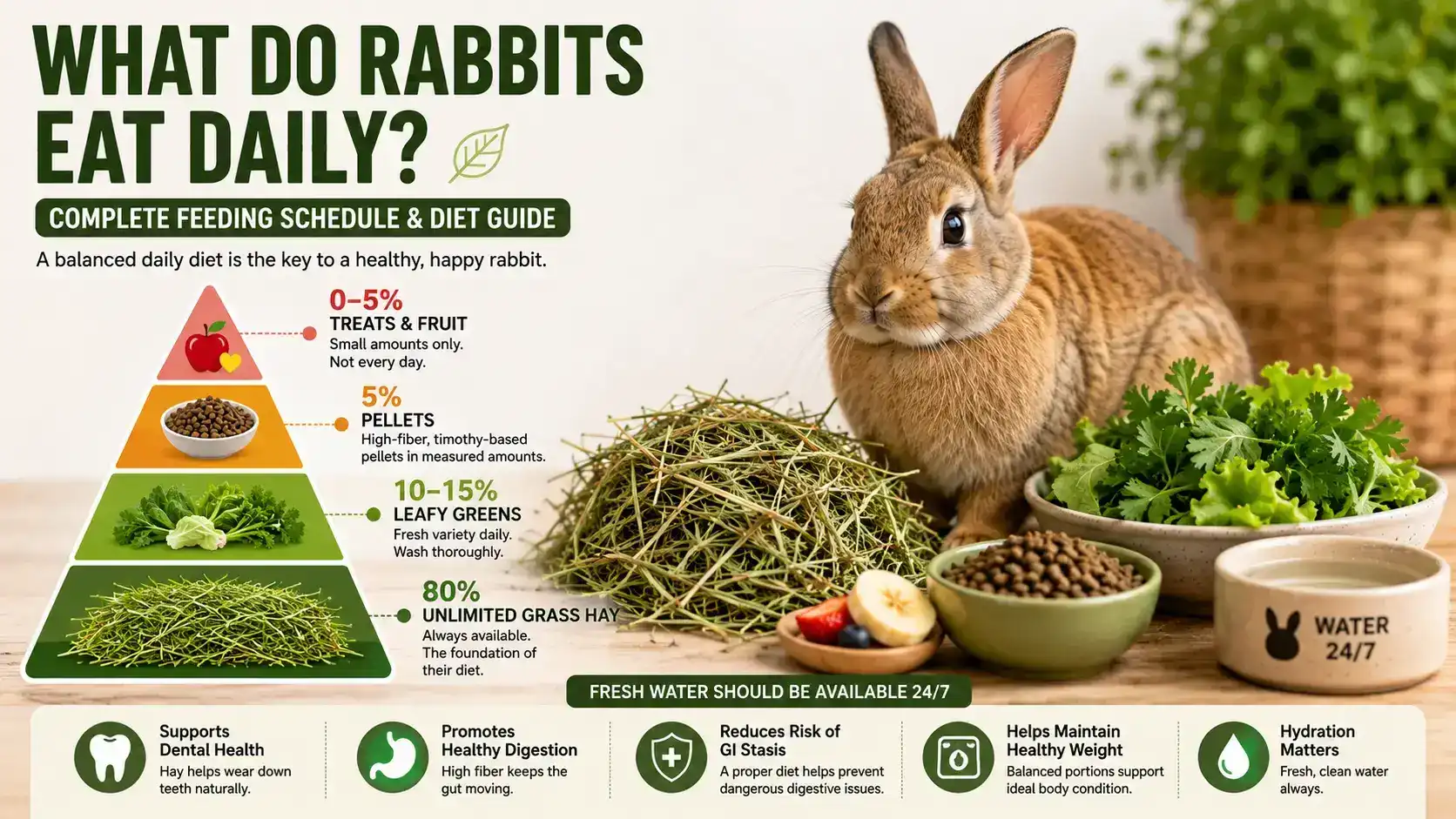
Visualizing your rabbit’s nutritional intake as a pyramid helps prevent the most common dietary failures. The vast majority of domestic rabbit health issues, from overgrown teeth to chronic urinary sludge, stem from owners inverting this pyramid by feeding too many pellets and not enough roughage.
Here at PawsHatch, we emphasize a strict ratio to mimic their natural grazing habits and keep their complex biology functioning correctly.
Unlimited Grass Hay (80% of the Diet)
Grass hay is the non-negotiable foundation of rabbit husbandry. It must be available in unlimited quantities, 24 hours a day.
Beyond providing the essential long-strand fiber required for continuous gut motility, hay serves a critical mechanical purpose. Rabbit teeth are open-rooted, meaning they never stop growing. The constant side-to-side grinding motion required to break down tough, silica-rich grass hay acts as natural sandpaper, wearing down the molars and preventing fatal dental spurs.
Timothy vs. Orchard vs. Alfalfa Hay
Not all dried grasses serve the same biological purpose, and feeding the wrong type can severely impact your rabbit’s internal organs.
- Timothy Hay: The gold standard for adult rabbits. It provides the perfect ratio of high fiber to low protein and low calcium. First-cut Timothy is coarser and excellent for dental wear, while second-cut is softer and leafier, making it highly palatable for most pets.
- Orchard Grass: An excellent alternative if you or your rabbit is allergic to Timothy hay. It offers a nearly identical nutritional profile but features a softer texture and a sweeter aroma, which can entice picky eaters to consume more roughage.
- Alfalfa Hay: This is a legume, not a grass. Alfalfa is incredibly rich in protein and calcium. It is strictly reserved for growing baby rabbits (under six months old), pregnant, or nursing does. Feeding alfalfa to a healthy adult rabbit leads directly to obesity and calcium-based kidney or bladder stones.
Fresh Leafy Greens (10% to 15% of the Diet)
While hay provides the bulk, fresh greens deliver essential hydration and micronutrients that dried grasses lose over time. Rabbits naturally derive a large portion of their daily water intake from the foliage they consume. However, not all greens are created equal. Many common vegetables contain high levels of oxalic acid or calcium, which can accumulate in a rabbit’s urinary tract and cause “bladder sludge.”
To safely construct their daily salads, use the following guide to separate daily staples from rotational treats.
Safe Greens vs. Rotational Greens
| Category | Frequency | Safe Plant Options | Why the Restriction? |
| Daily Staples | Every Day | Romaine lettuce, Cilantro, Bok choy, Dill, Bell pepper tops, Fennel, Arugula | Low in calcium and oxalic acid. Safe for continuous, daily digestion and hydration. |
| Rotational Greens | 1 to 2 Times Per Week | Spinach, Parsley, Kale, Swiss chard, Mustard greens, Radish tops | High in oxalic acid (which can bind calcium and cause toxicity) or high in calcium directly. |
Extruded Pellets (5% of the Diet)
In the wild, rabbits never encounter the concentrated, high-calorie density found in commercial pellets. Pellets were originally engineered for rapid weight gain in agricultural settings, not for the longevity of house pets. For a domestic rabbit, pellets are merely a vitamin supplement. They should make up no more than 5% of the diet, strictly portioned based on the animal’s target body weight.
Why Muesli Mixes Are Dangerous
When shopping for pellets, you will frequently encounter visually appealing bags containing a mix of pellets, dried corn, peas, seeds, and colorful flaked bits. These “muesli mixes” are actively detrimental to rabbit health.
Rabbits are highly selective feeders. When presented with a muesli mix, they will meticulously pick out the starchy, sugary bits (like peas and corn) and leave the healthy, fibrous pellets behind.
This selective eating spikes their blood sugar, disrupts the cecal flora, and dramatically reduces their calcium intake, leading to severe dental disease and metabolic bone issues. You must only purchase uniform, high-quality “extruded” pellets where every single bite looks identical and contains the same nutritional value.
Treats and Fruits (0% to 5% of the Diet)
Fruits and commercial rabbit treats belong at the absolute tip of the food pyramid. A rabbit’s digestive tract is highly sensitive to sugar. An influx of carbohydrates fuels the wrong type of bacteria in the cecum, overwhelming the beneficial flora and causing rapid gas buildup and liquid stool.
Fruits should be viewed as an occasional training reward rather than a dietary component. A safe portion is no more than one to two tablespoons per week of low-acid fruits like berries, or a thin slice of apple or banana.
The Complete Daily Rabbit Feeding Schedule
Establishing a consistent daily routine does more than simply keep your pet fed; it regulates their internal clock and stabilizes their gut motility. Rabbits are strictly crepuscular, meaning their biological activity naturally peaks at dawn and dusk while they spend the majority of the daylight hours resting.
A structured schedule capitalizes on these natural metabolic spikes. By aligning their most nutrient-dense meals with their active hours, you encourage better digestion and prevent boredom. To take the guesswork out of what do rabbits eat daily, here is the exact 24-hour routine we recommend to keep their delicate digestive system running smoothly.
The 24-Hour Feeding Chart
Following a consistent routine helps support healthy digestion, natural foraging behavior, and proper hydration throughout the day.
| Time of Day | Feeding Action | Biological Purpose |
| Morning (7 AM – 9 AM) | Feed 50% of daily fresh greens. Top off all hay racks. Wash and refill water bowls. | Replenishes hydration after the night and aligns with their natural dawn activity spike. |
| Midday (10 AM – 5 PM) | Strictly continuous hay grazing. No new greens or pellets. | Provides low-calorie roughage to sustain gut motility while the rabbit rests. |
| Evening (6 PM – 8 PM) | Feed remaining 50% of greens and the exact daily pellet portion. Refresh hay. | Capitalizes on the dusk energy surge and encourages natural foraging behaviors. |
| Night (9 PM – 6 AM) | Leave heavy, undisturbed access to hay and fresh water. | Sustains nighttime chewing and supports healthy cecotrope production. |
Morning (7:00 AM – 9:00 AM): Hydration and Fresh Greens
As your rabbit wakes up and becomes active, their body needs an immediate influx of hydration to help push the dry roughage they consumed overnight through their intestinal tract. This makes the morning the ideal time to serve the first half of their daily leafy greens.
Always serve these greens wet. Do not dry the leaves after washing them; that residual water is a stealthy and highly effective way to increase their total fluid intake, which dilutes their urine and prevents calcium sludge buildup in the bladder. Alongside the morning salad, empty their water bowls, wash away any biofilm, and refill them with fresh water.
Finally, pull out any soiled or trampled hay from their litter box area and pack the racks tightly with fresh Timothy or Orchard grass.
Midday (10:00 AM – 5:00 PM): Continuous Hay Grazing
During the afternoon, your rabbit will largely power down. They will alternate between deep naps and periods of quiet grooming. Because their metabolic rate slows during this resting phase, introducing rich foods like pellets or sugary treats can cause rapid, painful gas accumulation in the cecum.
Therefore, midday requires zero active feeding on your part, provided the morning hay racks were properly stuffed. When your rabbit briefly wakes between naps, they will instinctually pull a few strands of hay, chew them down, and go back to sleep. This passive, slow-drip intake of fiber is exactly what their hindgut needs to maintain a steady, safe rhythm until the evening.
Evening (6:00 PM – 8:00 PM): Pellets and Foraging Enrichment
As the sun sets, your rabbit’s energy levels will surge again. This is the optimal window to provide their strict daily allowance of extruded pellets and the remaining half of their fresh greens.
However, rather than just dumping the pellets into a ceramic bowl, use this meal to satisfy their psychological need to hunt for food. In the wild, a rabbit spends hours working for its calories. You can replicate this by “scatter feeding”, literally tossing their measured pellet portion across a clean rug or burying it deep inside a cardboard box packed with hay.
You can also utilize interactive puzzle toys or snuffle mats. Forcing them to sniff out and work for their nutrient-dense pellets slows down their eating speed, prevents choking, and provides critical mental enrichment that prevents destructive chewing behaviors around your home.
Portion Sizes: Exactly How Much Should I Feed My Rabbit?
Obesity is arguably the most common, entirely preventable disease seen in exotic veterinary clinics today. Because domestic house rabbits do not burn calories evading predators or foraging across miles of terrain, excess energy quickly accumulates as dense visceral fat.
A heavy rabbit faces severe mechanical limitations. If they carry too much weight, they physically cannot bend down to retrieve their cecotropes directly from their anus. This failure leads to a cascade of malnutrition and chronic, painful skin infections around their soiled hindquarters. To prevent this, you must ruthlessly measure their concentrated foods rather than relying on visual estimates or yielding to their begging behaviors.
Use the baseline calculations of 1 packed cup of greens per 2 pounds of body weight and a maximum of ¼ cup of pellets per 5 pounds of body weight.
Feeding Quantities by Body Weight
Use your rabbit’s ideal adult weight to estimate appropriate daily portions of greens and pellets while maintaining unlimited hay access.
| Rabbit Weight & Size Category | Daily Fresh Greens | Daily Extruded Pellets | Grass Hay Requirement |
| 2 lbs (Dwarf Breeds: Netherland Dwarf, Holland Lop) | 1 packed cup | 1 to 2 Tablespoons (⅛ cup) | Unlimited, 24/7 access |
| 5 lbs (Standard Breeds: Mini Rex, Dutch) | 2.5 packed cups | 4 Tablespoons (¼ cup) | Unlimited, 24/7 access |
| 8+ lbs (Giant Breeds: Flemish Giant, French Lop) | 4+ packed cups | 8 Tablespoons (½ cup) | Unlimited, 24/7 access |
Veterinary Note: These measurements apply to your rabbit’s ideal target weight, not necessarily their current weight. If you have an overweight 7-pound rabbit that should weigh 5 pounds, you must feed them the 5-pound portions.
Always monitor your rabbit’s litter box output to gauge if these portions are working. If you consistently find uneaten, squishy cecotropes scattered around their enclosure, it is a glaring biological indicator that their diet is too rich. They are receiving too many calories from their pellets and greens, causing them to ignore their nutrient-dense droppings. In these cases, immediately reduce the pellet volume and encourage more hay consumption.
Life Stage Adjustments: Baby, Adult, and Senior Diets
Just as a puppy requires entirely different nutrition than an aging hound, a rabbit’s dietary needs shift dramatically as their body matures. Applying a single, static feeding strategy across their entire lifespan will inevitably cause developmental deficits early on and severe organ damage later in life. You must adjust their daily intake to match the specific biological demands of their current life stage.
Feeding Baby and Juvenile Rabbits (0–7 Months)
During their first seven months, young rabbits undergo an explosive period of growth. They are rapidly constructing their skeletal structure and developing dense muscle mass. This intense physical development requires high levels of protein and dietary calcium, nutrients that are toxic in excess to adults but entirely necessary for juveniles.
Because of this, a baby rabbit’s diet must be built around alfalfa. Rather than Timothy grass, provide unlimited access to alfalfa hay and unrestricted access to alfalfa-based extruded pellets.
You must be cautious with fresh greens. A juvenile rabbit’s cecum does not yet possess the robust bacterial colonies needed to break down complex, watery vegetation. Wait until they are at least 12 weeks old before introducing greens.
Introduce only one type of leafy green at a time, in very small quantities, watching their stool closely. If you see unformed dropping or diarrhea, stop the greens immediately and return strictly to hay and pellets.
Feeding Adult Rabbits (7 Months–5 Years)
Around seven months of age, skeletal growth halts. This marks a critical turning point for their diet. If you continue feeding a mature rabbit calcium-heavy alfalfa, their body cannot use the excess minerals. Instead, they will excrete the unused calcium through their urinary tract, where it precipitates and forms thick, sandy bladder sludge or solid, life-threatening kidney stones.
At this stage, you must execute a strict dietary transition. Over the course of two to three weeks, slowly phase out the alfalfa hay and replace it entirely with unlimited Timothy or Orchard grass. Simultaneously, transition them from unlimited juvenile pellets to the strictly measured, Timothy-based adult pellets outlined in our portion guide. This is the maintenance phase of their life, and it relies heavily on strict portion control to prevent obesity.
Feeding Senior Rabbits (6+ Years)
As rabbits enter their senior years, their metabolic rate fluctuates, and physical mobility often declines, requiring a highly individualized approach to their feeding schedule.
Some aging rabbits become highly sedentary due to the onset of osteoarthritis. For these individuals, you may need to reduce their pellet intake even further to prevent creeping weight gain from putting additional stress on their failing joints.
Conversely, many senior rabbits begin to lose muscle mass and drop weight, even if they are eating their normal portions. Their digestive tract becomes less efficient at extracting nutrients from roughage. If your senior rabbit is losing weight, consult your exotic veterinarian. They will often recommend slightly increasing the daily pellet allowance, or even reintroducing a small, daily handful of rich alfalfa hay to boost their caloric intake.
You should adjust the physical accessibility of their food. Ensure their hay racks are placed low to the ground and switch to shallow, heavy ceramic water bowls so they do not have to stretch or strain painful neck and shoulder joints to eat and drink.
Foods That Are Toxic to Rabbits (Never Feed These)
Because rabbits possess a one-way digestive tract, they physically cannot vomit. If a rabbit ingests something poisonous or indigestible, the substance must travel through their entire system. You cannot induce vomiting at the vet clinic to reverse a dietary mistake. This anatomical limitation makes strict dietary management a matter of life and death.
Many owners inadvertently harm their pets by offering “human foods” or trusting cheap commercial treats marketed for small animals. If you find yourself searching for questions like “can rabbits eat bread?” or “what do rabbits eat daily” before sharing a snack, you should memorize this list of strictly prohibited items.
- Bread, Pasta, and Crackers: Rabbits cannot digest complex, refined carbohydrates. Feeding them starchy baked goods causes a rapid and deadly overgrowth of bad bacteria in the cecum, leading to painful gas distension and fatal enterotoxemia.
- Iceberg Lettuce: Unlike dark, nutrient-dense leafy greens, iceberg lettuce contains virtually no nutritional value. It is predominantly water and contains a chemical compound called lactucarium. Ingesting it acts as a mild sedative and triggers life-threatening diarrhea in young and adult rabbits alike.
- Seeds and Nuts: Frequently hidden in cheap muesli-style pellet mixes, whole seeds and nuts are immediate choking hazards. Beyond the physical danger, they are far too high in fat for an herbivore’s liver to process. The hard hulls also risk creating solid blockages in the intestines, triggering GI stasis.
- Alliums (Onions, Garlic, Chives, and Leeks): These vegetables are highly toxic to your pet. They contain chemical compounds that attack and destroy a rabbit’s red blood cells, causing a sudden and fatal condition known as hemolytic anemia.
- Dairy Products (Including Pet Store “Yogurt Drops”): Rabbits are obligate herbivores. Once weaned from their mother’s milk, they permanently lose the specific enzymes required to break down lactose or dairy proteins. Commercially sold yogurt drops, heavily marketed to beginners, will cause gastrointestinal distress.
- Avocado: The skin, pit, leaves, and flesh of an avocado contain a fungicidal toxin called persin. While entirely harmless to humans, persin ingestion in rabbits leads to respiratory distress and rapid congestive heart failure.
Preventing GI Stasis through Diet
For any rabbit owner, “GI stasis” is the two most terrifying words you can hear in an exotic clinic. Gastrointestinal stasis, clinically known as ileus, is the silent killer of the rabbit world.
It is crucial to understand from a veterinary perspective that stasis is rarely a spontaneous, primary disease. While severe stress or hidden pain can trigger a digestive slowdown, the overwhelming majority of GI stasis cases are the direct result of chronic dietary mismanagement.
When a rabbit consumes a diet deficient in fiber or too rich in carbohydrates and sugars, the delicate microbiological ecosystem inside their cecum collapses. Harmful, gas-producing bacteria rapidly overpower the beneficial gut flora.
As gas builds up in the intestines, it causes excruciating abdominal pain. Because rabbits possess a deep biological instinct to mask pain from predators, their immediate response is to hunker down and stop eating entirely.
This creates a fatal feedback loop. By refusing to eat, they cut off the supply of incoming fiber needed to push the gas out. The gut muscles slow down and eventually grind to a complete, lethal halt.
Your strict adherence to the daily feeding schedule is your only true defense against this cascade. You prevent stasis through two primary dietary mechanisms:
- The Mechanical Broom: The indigestible and long strands found in unlimited Timothy hay act as an internal scrub brush. As these coarse fibers travel through the digestive tract, they sweep away the loose hair your rabbit swallows during daily grooming. Without this massive influx of roughage, the ingested fur binds with soft, digested food to form an impenetrable blockage in the stomach.
- Internal Hydration: A stalled gut almost always features a hard, dehydrated mass of impacted food. By serving wet, fresh leafy greens and prioritizing clean water access over dry, starchy pellets, you keep the intestinal contents slick, hydrated, and easily passable.
Every time you restrict their pellet portion or refill an empty hay rack, you are not just feeding your pet; you are administering preventative, life-saving medicine.
Frequently Asked Questions
Rabbit owners often have a few practical feeding questions that don’t fit neatly into a daily diet plan. Here are concise answers to some of the most common concerns about rabbit nutrition and feeding habits.
Final Thoughts
A healthy rabbit diet starts with unlimited grass hay, supported by fresh leafy greens, measured pellets, and constant access to clean water. Following a consistent feeding schedule helps maintain proper digestion, supports dental health, and reduces the risk of serious conditions like GI stasis. By feeding according to your rabbit’s age, size, and life stage, you can help them stay healthy, active, and thriving for years to come.
References
- Moore, L. (2017). Rabbit Nutrition and Nutritional Healing. (Third Edition).
- N. A. Irlbeck, How to feed the rabbit (Oryctolagus cuniculus) gastrointestinal tract, Journal of Animal Science, Volume 79, Issue suppl_E, 2001, Pages E343–E346, https://doi.org/10.2527/jas2001.79E-SupplE343x
- Carlos de Blas, Javier García, Rosa Carabaño. Role of fibre in rabbit diets. A review. Annales de zootechnie, 1999, 48 (1), pp.3-13. ⟨hal-00889777⟩
- Varga M. Rabbit Basic Science. Textbook of Rabbit Medicine. 2014:3–108. doi: 10.1016/B978-0-7020-4979-8.00001-7. Epub 2013 Oct 10. PMCID: PMC7158370.