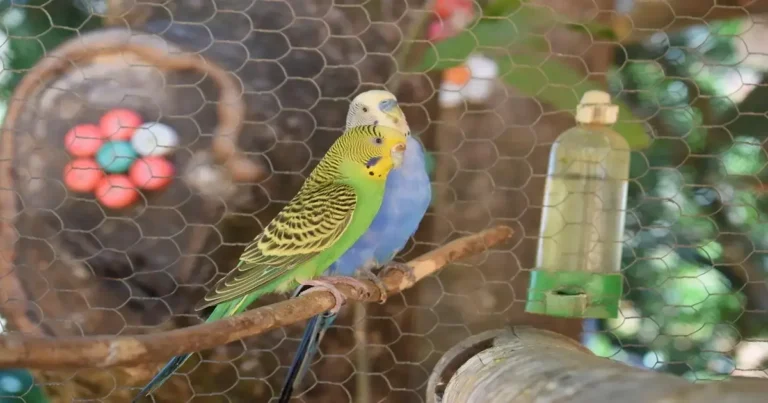

Bringing home a new parakeet can be frustrating when they hide in a corner, panic as you walk past, or flap wildly whenever you get close. If you’re wondering how to tame a scared parakeet, the first step is understanding that this behavior is completely normal for a bird adjusting to an unfamiliar environment.
As prey animals, parakeets instinctively view unfamiliar people, sounds, and surroundings as potential threats. Trying to handle them too soon usually reinforces that fear, while patience and positive reinforcement help build lasting trust.
This step-by-step guide shows you how to help your bird feel safe, build trust through positive interactions, begin finger taming, and teach the step-up command using beginner-friendly methods that respect your parakeet’s pace.
Veterinary Review: This guide has been reviewed by our practicing DVM veterinarians to ensure the training methods are safe, humane, and based on positive reinforcement.
Why Your Parakeet Is Scared in the First Place
Understanding why your parakeet is scared makes the taming process much easier. Most fearful behaviors are a normal response to unfamiliar surroundings, not signs of aggression or stubbornness.
New Environments Feel Dangerous to Parakeets
Parakeets are small birds instinctively wired to stay alert. Their instinct is to get away from anything unfamiliar. When you place a bird in a new home, their instincts signal that the cage, the room layout, and the people nearby could be dangerous. They do not yet know they are secure.
A household that feels normal to you is often overwhelming to a new bird. They remain easily startled by sudden movements, like a person walking past the cage quickly, and unfamiliar sounds, such as doors shutting or loud conversations.
Common Signs of Fear in a Parakeet
You need to recognize when your bird feels stressed before starting any taming routine. A scared parakeet shows clear signs that they need space.
| The Behavior | What It Looks Like |
| Freezing | Sitting stiff on a perch, staring straight ahead. |
| Backing away | Shuffling to the farthest cage corner when someone approaches. |
| Frantic flying | Flapping wildly around the enclosure and hitting the bars. |
| Heavy breathing | Resting with an open beak and a rapidly moving chest. |
| Avoiding hands | Leaning away or changing perches when a hand gets close. |
If you notice these behaviors, stop interacting and step back. Read our full guide to parakeet body language to understand these signals further.
What You Should Do Before Starting Taming
Before training, set up a calm environment and allow your bird time to settle in.
Veterinary Review: Our veterinarians recommend delaying taming sessions if a previously tame parakeet suddenly becomes fearful and also shows signs of illness, such as fluffed feathers, lethargy, loss of appetite, or breathing difficulties. In these cases, an examination by an avian veterinarian is more appropriate than continued training.
Place the Cage in a Calm Area
Where you place the cage matters a lot. Choose a quiet corner away from blaring televisions or busy hallways where family members constantly walk past. Set the cage at eye level. If it sits too low, looking down at the bird mimics a predator circling above. If it rests too high, the parakeet feels isolated.
Give Your Parakeet Time to Settle In
During the first 24 to 72 hours, practice complete restraint. Let the bird observe the room without any pressure. Only open the doors to change food and water. Never reach in to grab them or chase them from perch to perch. This initial window allows them to get familiar with their new surroundings, and patience here is the foundation if you want to tame a scared parakeet effectively.
Remove Things That Increase Fear
Look around the room and eliminate things that scare the bird. Avoid making sudden hand movements when walking nearby. Keep young children and other pets away from the bars to prevent overcrowding. Forcing interaction while the bird is still frozen in place will only make them even more nervous.
Find the Right Training Treat
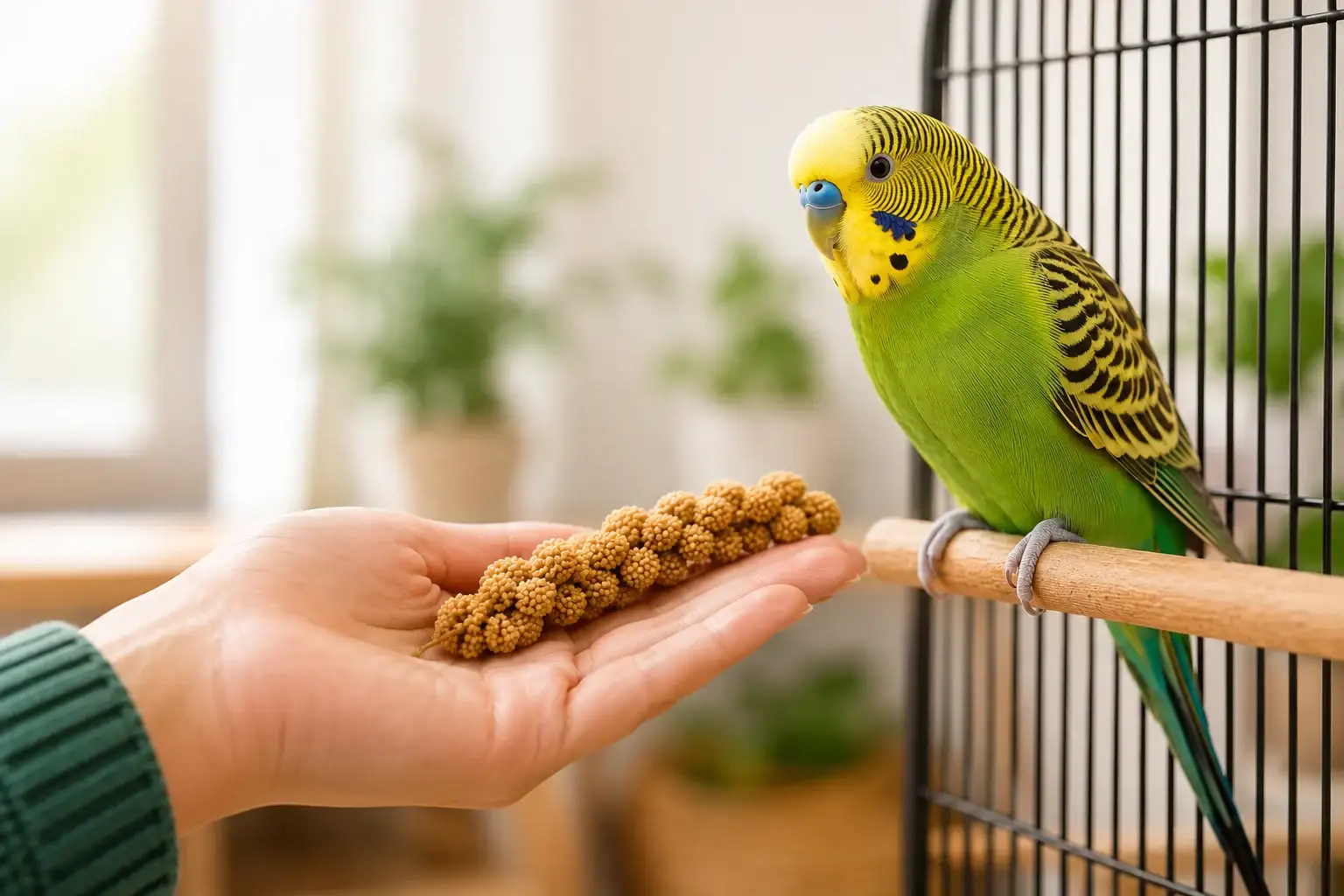
You need a favorite treat to help the bird connect you with something good. Millet spray is widely considered the best option. Break it into tiny clusters rather than offering the whole stick. This prevents the bird from getting full too quickly. When they realize your presence results in their favorite food, they slowly become more comfortable around you.
Step 1 — Help Your Parakeet Feel Safe Around You
Before opening the door, your bird must accept you standing nearby. This phase helps the bird calm down around you so they stop viewing your approach as something scary.
Sit Near the Cage Daily
Spend time near the enclosure without trying to interact directly. Pull up a chair and read a book, work on a laptop, or scroll on your phone. Staying calm around the cage helps the bird realize you are just part of the room.
Speak softly around the cage so the bird gets used to your voice without feeling startled. Do this at the same time each day to keep a consistent routine. Predictability creates a stable environment and helps the bird feel secure.
Let the Bird Watch Your Hands
Hands are often the scariest thing to a new bird. If your goal is to tame a scared parakeet without causing panic, the secret is letting them see your hands doing harmless tasks before you ever attempt direct contact.
Practice slow movement whenever your arms are raised near the enclosure. Change food and water slowly and calmly. Unlatch the bowls, slide them out, and replace them without hovering inside the cage space. If the bird flutters away to the far wall, pause your hand until they settle down, then slowly finish the daily chore.
Start Offering Treats Through the Cage Bars
Once they tolerate your hands changing the bowls, introduce food rewards. Hold a tiny piece of millet spray between your fingers and gently pinch it through the outer bars. Stand completely still. Some birds require a lot of patience.
The bird might stare at the millet and refuse to step forward. If they do not take it after a couple of minutes, drop the treat into a dish and walk away. Simply try again during your next session. The most important thing is to never force contact. Let the bird choose to approach the food on their own terms.
Signs Your Parakeet Is Becoming More Comfortable
You will notice distinct shifts in how the bird acts when your early progress is paying off. Look for these clear signs:
- Staying near you instead of retreating to the opposite side of the enclosure when you walk into the room.
- Eating from their food bowl while you are nearby, showing they feel secure enough to look away from you.
- Instead of panicking or freezing in place, the bird might tilt their head or take a step forward to watch you closely.
These behaviors signal that the initial flight response is fading. You are no longer seen as dangerous, and the bird is ready for the next step.
Step 2 — Begin Hand Taming Inside the Cage
Once your bird accepts your presence outside the enclosure, you must slowly take the next step to tame a scared parakeet. This phase transitions from watching from outside the cage to interacting inside it. The goal is to show the bird that your hand is harmless.
Introduce Your Hand Slowly
Begin by opening the cage door smoothly. Slide your hand inside and find a comfortable spot to rest it, preferably near a perch but not directly next to the bird. Keep your hand flat and still.
Do not make any attempts to touch the parakeet’s chest or feet during these initial stages. Reaching for them right away will instantly cause them to panic and take flight. You want the bird to look at your hand, realize it is not moving toward them, and eventually return to their normal activities while you are still holding your position.
Use Millet to Encourage Approach
When the parakeet stops panicking at the sight of your resting hand, introduce a treat reward. Hold a small sprig of millet spray at the tips of your fingers. Position your hand so the treat is visible but still requires the bird to take a step or two toward you.
Timing matters here. If the bird leans in and takes a bite, hold perfectly still. Let them eat for a few seconds, then slowly withdraw your hand and close the door. Keep these encounters brief. Short sessions help the bird stay relaxed and comfortable for your next visit.
Don’t Chase the Bird Around the Cage
This is an important rule for beginners. If you reach inside and the bird flies frantically to the top corner, do not follow them with your hand. Chasing a parakeet around their enclosure can undo a lot of the progress you made. It causes intense fear and teaches the bird that your hand is a persistent threat they cannot escape.
Cornering a terrified bird will delay the process and make it much harder to tame a scared parakeet successfully. If the bird moves away from you, leave your hand stationary for a moment, then calmly remove it and try again later. Respect their boundaries.
Repeat Short Sessions Every Day
Taming relies on short daily practice rather than marathon training blocks. Limit your interaction to 5 to 10-minute sessions, repeated two or three times a day. Short daily sessions work better than long sessions once in a while.
A parakeet learns much faster through short daily sessions than through a single hour of forced handling. Shorter timeframes also prevent the bird from becoming stressed or tired. Stick to the daily schedule, and you will see gradual improvement.
Step 3 — Teach Finger Taming
Once your bird eats treats from your hand without showing panic, you can start getting the bird comfortable stepping onto your hand. Finger taming teaches the parakeet that your hand is a safe place to perch inside the enclosure.
Turn Your Finger into a Perch
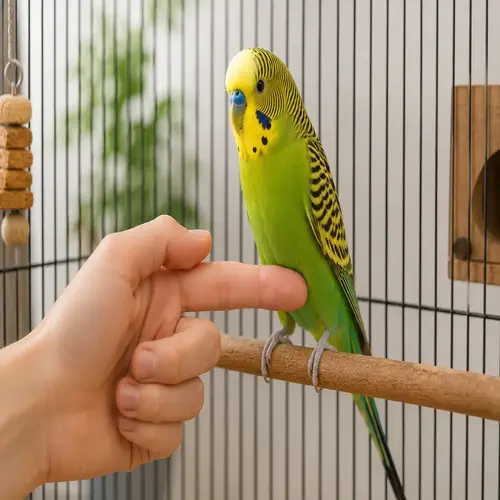
Extend your index finger horizontally while tucking your thumb and other fingers away. This specific finger positioning creates a straight line similar to the perches they already stand on.
Slowly bring your hand toward the bird using a steady, gentle approach. Bring your finger right up to their lower belly for the correct height. If you hold your finger too high, the parakeet will naturally duck its head. If you hold it too low, the bird will simply stretch over the finger to grab the treat. Finding the right position matters.
Encourage One Foot at a Time
Do not expect a scared bird to confidently hop onto your hand right away. Focus strictly on gradual progress, as rushing will ruin your efforts to tame a scared parakeet. Hold a small piece of millet just far enough away that the parakeet has to lean forward to reach it. As they stretch, gently touch your extended finger against their stomach. Often, the bird will lift just one foot and rest it on your skin to keep their balance while eating. Try to reward small improvements like this. Keep your hand still and let them finish the bite. This simple action proves to the bird that your hand can safely hold them.
Stay Calm if the Bird Backs Away
During these early attempts, the bird will likely step back or flutter to a different spot in the cage. Recognize that these are completely normal. Your reaction here matters a lot. The best approach is to avoid sudden reactions. Do not quickly pull your hand out of the cage or follow the bird to the next perch. Leave your hand exactly where it is for a few seconds, let the bird calm down, and then slowly withdraw your arm. Staying calm helps the bird feel safe.
When Your Parakeet Starts Perching Comfortably
Over several days, the bird will stop hesitating and start stepping up with both feet. You will notice them becoming more comfortable as they grip your finger securely. They will stop leaning away and stand fully upright. At this point, focus on repetition. Continue this routine daily. Have the bird sit on your finger while eating their treat inside the cage. Do not try to move your hand or take them out of the enclosure yet. Let them get used to the feeling of standing on your skin first.
Step 4 — Teach the “Step-Up” Command
Once your parakeet comfortably sits on your hand inside the enclosure, you are ready to teach the step-up command. This phase changes the training from simply tolerating your hand to willingly stepping onto it.
What the Step-Up Command Means
This is the most important basic command for all pet birds. It serves as the basic handling skill for the rest of their life in your home. You will use this specific motion to move them away from hazards, return them to their enclosure after playtime, or transfer them to a travel carrier. Instead of simply tolerating your finger, the bird learns to willingly step onto your hand whenever asked.
How to Introduce the Command
Position your hand exactly as you did during the earlier finger-taming phase. Bring your index finger toward the bird’s lower chest, resting it just above their feet. As you make a gentle touch, say “step up” clearly and consistently. Gently press your finger against their belly. This slight backward push naturally shifts the bird’s balance, prompting them to lift one foot to stay balanced on your extended finger.
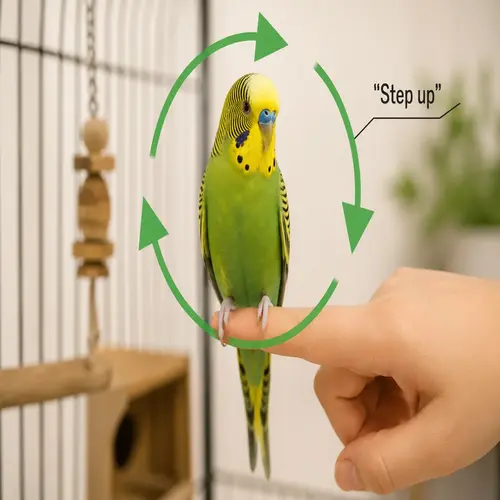
The moment they lift that foot, hold your hand still. You want the bird to link the command and the physical pressure with the action of moving forward.
Reward Every Successful Step-Up
Immediate positive reinforcement helps the bird understand what you want. Offer a tiny piece of millet spray the exact second both feet are secure on your finger. Accompany the food with quiet praise so the bird hears a distinct, positive shift in your vocal tone.
Repeating this daily helps the bird learn faster. Have the bird step up, eat their reward, and then gently rotate your hand near a dowel so they step back down onto their perch. Practice this sequence repeatedly over several days. Eventually, the bird will respond naturally whenever they hear the command.
Practice Outside the Cage Carefully
Moving a bird past the cage door changes the entire situation. Their enclosure is their safe place, and wide-open rooms often trigger fear again in a newly tamed bird.
Ideally, create a calm, safe room before attempting this. Close all room windows, draw the blinds so the bird does not accidentally fly into the glass, and shut the door to block other pets. Ask the parakeet to step up, and slowly withdraw your hand through the opening. If they flutter off your finger and land on the floor, stay calm and offer your finger again.
Keep these first out-of-cage sessions under five minutes. Let them observe the room from the safety of your hand before steadily returning them inside.
Mistakes to Avoid When Trying to Tame a Scared Parakeet
Avoiding common handling errors is just as critical as following the right training steps. Specific human reactions will undo your progress and make the bird afraid of hands again.
Moving Too Fast
Beginners frequently rush through the early stages to get immediate results. Skipping directly from offering food through the bars to touching the bird’s chest ruins their new sense of safety. If the parakeet still freezes when you walk into the room, they are not ready for direct contact. Let the bird set the daily pace.
Trying to Grab the Bird
Never wrap your fingers around a panicked bird to pull them out of a corner. Grabbing physically mimics a predator capturing its target. This action causes extreme fear and erases weeks of careful routine building in a single moment. If you must transport them for an absolute emergency, guide them into a small travel box instead of using your bare hands.
Forcing Out-of-Cage Time
Shooing the bird out into the open room causes panicked flying. The cage acts as their safest place. If the parakeet refuses to step through the open door, respect that clear boundary. They will exit the enclosure naturally once they observe that the outside environment is harmless.
Training for Too Long
Holding your hand inside the cage for thirty minutes straight exhausts the bird. Instead of learning the command, the parakeet becomes overwhelmed and stressed. Keep your interactions strictly under ten minutes. Stop the session while the bird remains calm so they remember the experience as a neutral or positive event.
Punishing Fear Responses
Nipping or backing away are natural fear reactions. Scolding, tapping the beak, or shaking the dowel only validates their terror. You handle this by removing your hand to provide space, then evaluating what specific movement caused the bite.
How Long Does It Take to Tame a Scared Parakeet?
There is no fixed timeline to tame a scared parakeet. Some birds begin accepting treats within days, while others need several weeks or even months to build trust.
The timeline depends on factors such as age, previous handling, personality, and the consistency of your training routine. The pace of your progress depends on several variables, starting with personality. Some birds are naturally bold and inquisitive, while others remain more nervous of anything new.
Typical Parakeet Taming Timeline
| Parakeet Type | Typical Timeline | What to Expect |
| Young, hand-raised parakeet | 1–3 weeks | Usually accepts treats and begins finger taming quickly. |
| Young pet-store parakeet | 2–6 weeks | Needs time to adjust before trusting hands. |
| Adult parakeet with limited handling | 1–3 months | Progress is slower, but consistent daily training builds trust. |
| Rescue or severely frightened parakeet | Several months | Requires patience and gradual trust-building without forcing interaction. |
Age and Previous Handling
Age plays a significant role in adaptability. Young parakeets usually accept new environments and daily handling much faster than older birds. Their previous experiences also directly impact their current behavior.
A bird raised by a breeder who practices regular hand-feeding will adjust faster. On the other hand, a parakeet sourced from a busy pet store with minimal human contact starts far more fearful, requiring a longer adjustment period to realize that hands are not a threat.
Owner Consistency
Your daily habits affect how quickly the bird learns. Skipping practice days or ignoring the regular daily habits slows training down a lot. Five to ten minutes of interaction every single day yields faster results than sporadic, extended attempts on the weekends. If you maintain a regular schedule, the bird will steadily settle into the new routine.
When Your Parakeet Finally Starts Trusting You
The shift from fear to trust is marked by clear behavioral changes. You will notice the bird becoming less fearful over time. Instead of flying to the opposite side of the enclosure when you walk into the room, the bird will hold its ground.
Staying calm near hands is the most significant milestone in this process. Your parakeet will watch you change the daily food and water bowls without displaying any scared reactions.
Learning becomes much easier at this stage. Instead of nervously stretching toward treats, the bird will immediately approach your hand. The bird will actively seek out the millet spray the moment you open the cage door.
The ultimate indicator of a successful taming journey is willingly stepping up. When you present your finger and state the command, the parakeet will lift its foot and mount your hand without hesitation. They now recognize the gentle push and the verbal cue as a normal and safe experience.
At this point, the bird no longer sees you as something to fear. You can safely manage their daily care, transport them around the room securely, and maintain a structured environment for any future commands you wish to teach.
Frequently Asked Questions
Still have questions about your bird’s behavior? Here are quick answers to the most common challenges owners face when trying to tame a scared parakeet.
Conclusion
Learning to tame a scared parakeet takes time and relies heavily on your daily habits. Success does not happen overnight. It requires patience and regular short sessions. By respecting the bird’s boundaries and moving at a pace they dictate, you slowly replace their natural panic with a sense of safety.
Remember to keep your expectations realistic. Setbacks, such as the bird backing away or refusing a treat, are normal parts of the adjustment period. Do not let these moments dictate your improvement. Simply step back, look at what scared the bird, and try again during the next scheduled session. Your calm, steady presence is the most effective tool you have in building a strong sense of trust.
Earning a new pet’s trust takes time, but the resulting behavior change is highly rewarding. Stick to the regular schedule, keep your short practice periods under ten minutes, and observe their daily body language. A scared parakeet becomes tame through repeated safe experiences, not force.