
Feeding a crested gecko requires balancing their natural preference for both fruit and insects. In the wild, they eat overripe fruit and hunt bugs. Replicating this frugivore-insectivore balance in a home terrarium takes some planning. A proper crested gecko diet means moving beyond basic advice to understand specific portion sizes.
This crested gecko diet guide walks through the exact ratio of commercial powdered food to live feeder insects. You will find detailed feeding schedules based on the age of your pet. We also clarify which fresh fruits work as safe treats versus those that create health problems.
For details on setting up the ideal terrarium temperatures to support their digestion, refer to our foundational Crested Gecko Care Guide. The focus here remains on what goes into their food bowl.
What Can Crested Geckos Eat?
A healthy crested gecko diet consists primarily of a complete commercial crested gecko diet (CGD), supplemented with appropriately sized live insects and occasional fruit treats. The table below provides a quick overview of safe and unsafe foods.
| Food Category | Examples |
| Staple Foods | Commercial CGD (Pangea, Repashy) |
| Recommended Insects | Dubia roaches, crickets, black soldier fly larvae |
| Occasional Fruit Treats | Papaya, figs, mango, banana |
| Foods to Avoid | Avocado, citrus fruits, rhubarb, starfruit |
Quick Rule: A complete commercial CGD should make up the majority of your crested gecko’s diet, while insects provide supplemental protein, and fresh fruits should only be offered occasionally.
Quick Rule: A complete commercial CGD should make up the majority of your crested gecko’s diet, while insects provide supplemental protein, and fresh fruits should only be offered occasionally.
The Frugivore-Insectivore Balance
The crested gecko (Correlophus ciliatus) originates from the island forests of New Caledonia. In their natural habitat, these reptiles act as opportunistic eaters. They spend their nights searching for overripe fallen fruits and licking nectar from native foliage. Passing bugs provide their animal protein. This distinct dietary blend defines them as a frugivore.
Replicating a tropical forest floor diet in a home terrarium poses a practical challenge. Fresh store-bought produce lacks the nutritional profile of rotting island vegetation. Captive settings lack wild pollen. Because of this, a balanced crested gecko diet relies on formulated powders to replace the fruit portion of their natural food intake.
A proper feeding routine requires specific ratios. The fruit-based powder serves as the foundation. A standard weekly intake consists of seventy to eighty percent commercial powder. Live feeder insects make up the remaining twenty to thirty percent.
This ratio shifts depending on the age of your pet. Growing hatchlings require more live protein to support physical development. When watching a young gecko, you will normally notice a strong hunting drive. Adult geckos favor a heavier focus on the fruit mixtures. They tend to wait for the feeding ledge to be filled. Balancing these two distinct food sources keeps their weight stable.
Commercial Crested Gecko Diet (CGD): The Foundation
A commercial Crested Gecko Diet (CGD) serves as the core of your feeding routine. People sometimes attempt to create homemade fruit purees using grocery store produce. Blending bananas and berries feels like a natural approach. This practice consistently leads to severe malnutrition.
Store-bought fruits lack the complex mineral profiles found in wild tropical vegetation. A homemade blend provides sugar but starves the reptile of essential nutrients. Commercial powders eliminate this guesswork. These formulas replicate the exact nutritional density needed to keep the reptile healthy long-term.
Why Formulated Diets are Essential
Veterinary nutritionists engineer these powders to solve a specific mathematical problem. Reptiles require a precise calcium-to-phosphorus ratio to maintain bone density.
When a diet contains too much phosphorus, the body fails to absorb calcium. A quality commercial crested gecko diet guarantees this ratio stays balanced in every bite. They also include synthetic Vitamin D3. Crepuscular reptiles receive limited ultraviolet light in captivity. Vitamin D3 acts as the key allowing their intestines to absorb dietary calcium. Without it, the minerals pass right through their system.
Veterinary Perspective: Skip the Baby Food
One of the most preventable issues we see in the clinic is Metabolic Bone Disease (MBD) caused by well-meaning owners feeding fruit baby food. Baby food is balanced for human infants, not reptiles. It lacks calcium, and feeding it actually forces the gecko’s body to pull calcium out of its own skeleton to survive. This leads to soft, rubbery jaws and permanent spinal kinks. Stick to commercial powdered diets; the veterinary nutritionists have already done the math for you.
The Industry Standard Brands
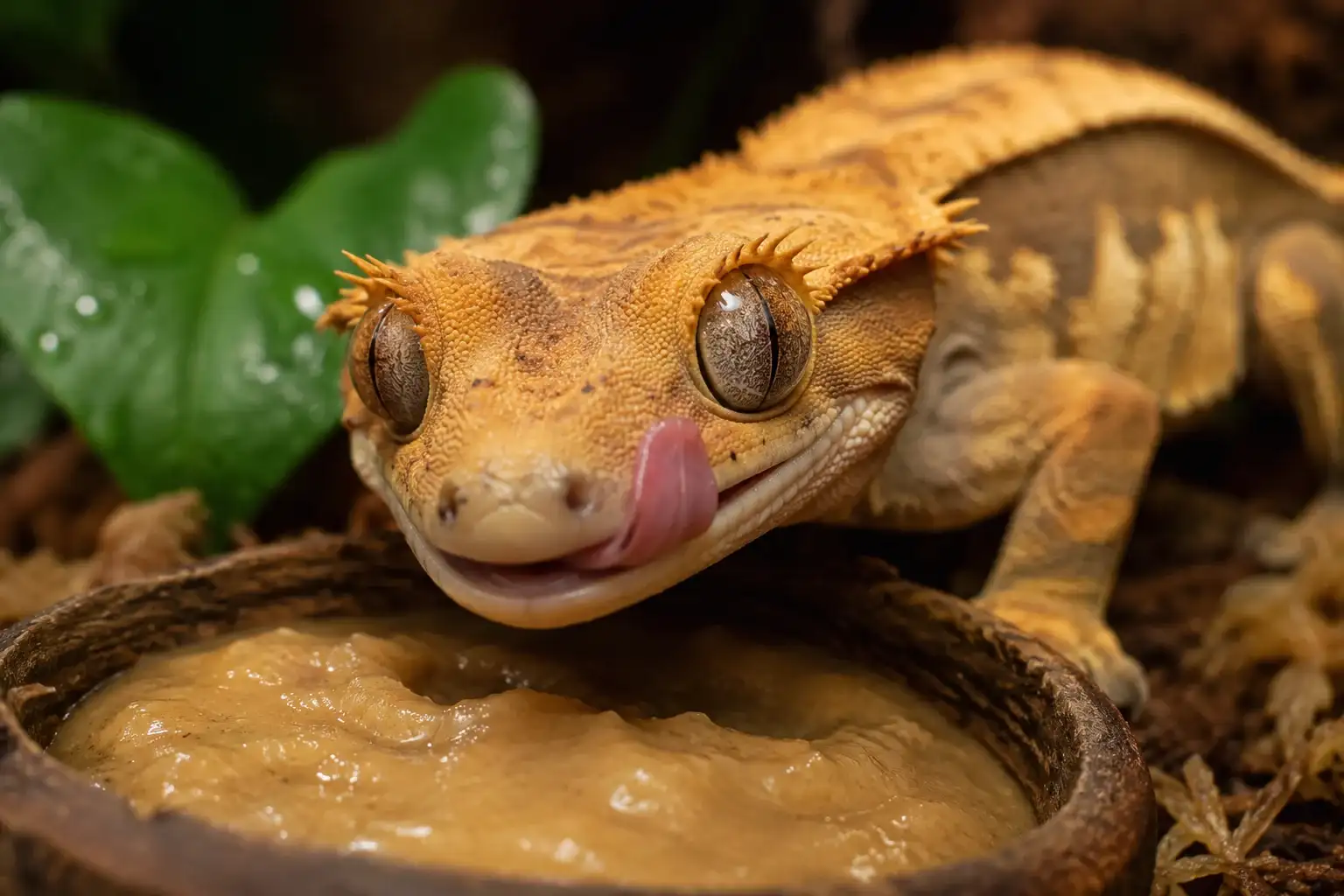
Two brands dominate the market when choosing a staple crested gecko diet: Pangea and Repashy. Both deliver complete nutrition but offer different sensory experiences for the reptile. Pangea creates a thinner texture once prepared. Keepers note that Pangea features pungent, sweet fruit smells. Blends featuring watermelon or papaya draw out shy eaters by mimicking overripe tropical fruit.
Repashy produces a thicker consistency. It sets into a slight gel when sitting in the bowl. Repashy carries an earthier scent. Their blends lean heavily on protein elements, incorporating ingredients like black soldier fly larvae alongside the fruit base.
Geckos show strong individual preferences between the two brands. Keeping a few different flavors on hand helps to rotate meals throughout the month.
For specific preparation techniques, read our guide on How to Mix Crested Gecko Diet Properly. If your reptile turns away from the feeding ledge, explore the Best Crested Gecko Foods for Picky Eaters.
Feeding Live Insects (The Protein Boost)
Offering live insects gives your reptile a chance to practice natural hunting behaviors. Watching a crested gecko track a cricket across the terrarium highlights their intense focus. This stalking and pouncing activity provides valuable mental enrichment. It breaks up the routine of licking powder from a static bowl.
For juvenile geckos, live protein acts as a building block for physical growth. A young gecko hunting a few times a week gains weight at a steady pace. Adult geckos still benefit from the exercise. Some older reptiles lose interest in chasing fast bugs, while others retain a strong prey drive. Offering live feeders keeps their environment engaging.
Best Feeder Insects for Crested Geckos
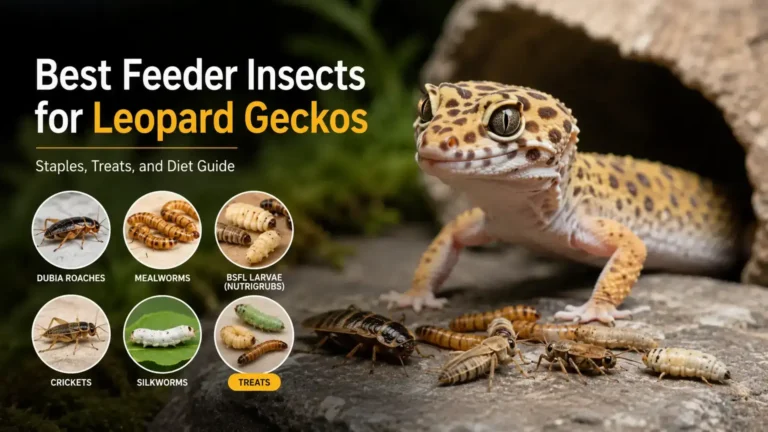
Selecting the right bugs ensures safe digestion. Dubia roaches serve as an excellent primary feeder. They offer substantial protein without carrying foul odors. Crickets stimulate a strong feeding response because they move erratically. Black soldier fly larvae provide an alternative soft-bodied option.
When buying any of these insects, pay attention to their size. A standard sizing guideline helps prevent choking hazards. Feed insects that are narrower than the space between your gecko’s eyes. Offering a bug that is too large causes digestive distress. Sorting through the bug container to pick out appropriately sized options before feeding time helps a lot.
Insects to Avoid
Catching bugs from the backyard introduces hidden dangers. Wild insects carry internal parasites. They also encounter lawn pesticides. Buying farm-raised feeders from a pet supplier remains the safest route.
Certain commercial bugs pose problems as well. Mealworms feature thick outer shells. This tough exterior requires significant heat to digest. Small geckos struggle to break down this material. The undigested shell creates stomach blockages.
Veterinary Perspective: The Mealworm Mistake
We frequently treat young crested geckos for severe intestinal blockages (impaction) because they were fed mealworms or superworms. Crested geckos have a hard time digesting thick, chitinous exoskeletons. If your terrarium temperatures drop even a few degrees at night, the gecko’s digestion slows down. Those hard shells act like a literal roadblock in their gut. Play it safe: feed soft-bodied insects or appropriately sized dubia roaches instead.
Gut-Loading and Dusting Protocols
Before an insect goes into the reptile enclosure, its stomach needs to be full of nutrients. Bugs metabolize food fast. What a cricket eats a day prior becomes the exact nutrition your gecko absorbs. Skipping this step leaves the feeder nutritionally empty. Dusting the fed insects with a calcium and Vitamin D3 powder right before feeding prevents Metabolic Bone Disease (MBD).
Recipe 1: The Daily Staple Matrix (High Calcium / Low Phosphorus)
This daily blend establishes a solid mineral foundation.
- Dry Base Component: Use whole oats or wheat bran for energy. Add alfalfa meal to provide natural trace minerals.
- Fresh Hydration Component: Provide moisture through butternut squash slices or sweet potato. Include raw carrots to prevent the dry mix from molding.
Recipe 2: The Growth and Repair Booster (For Juvenile/Breeding Geckos)
Growing reptiles benefit from targeted nutrient boosts.
- Dry Base Component: Sprinkle crushed spirulina flakes for protein. Bee pollen granules mimic wild foraging options.
- Fresh Hydration Component: Offer dandelion greens as a calcium-rich hydration source. Papaya slices deliver natural enzymes.
Ingredients to Strictly Avoid (The Toxicity Checklist)
Some common household items harm reptiles when fed to insects.
- Dog or Cat Kibble: Pet food contains excess animal protein. This damages the kidneys of fruit-eating reptiles.
- Spinach: This leafy green binds to calcium. It renders the insect useless as a mineral source.
- Citrus Fruits: Acidic fruits irritate the reptile digestive tract.
Safe vs. Toxic Fruits for Crested Geckos
Fresh fruit serves as a rare treat rather than a daily staple. People sometimes assume a bowl of mashed bananas replaces a commercial crested gecko diet. Relying on grocery store produce disrupts their required calcium ratios.
You can offer a small portion of fresh fruit once or twice a month. Treat days give the reptile a change in flavor. Feeding fruit more frequently causes them to reject their primary diet. They hold out for the sweeter option.
Keep portion sizes small. A spoonful of mashed fruit satisfies their craving without throwing their digestion off balance.
Table 2: Safe vs. Toxic Fruits Quick Reference
| Fruit | Safety Status | Preparation & Feeding Notes |
| Papaya | ✅ Safe (Top Choice) | Excellent calcium-to-phosphorus ratio. Mash or puree thoroughly. |
| Figs | ✅ Safe (Top Choice) | Extremely high in calcium. Excellent treat when mashed. |
| Mango | ✅ Safe | Great occasional treat. Must be completely peeled and pureed. |
| Banana | ✅ Safe (Use Sparingly) | Geckos love the taste, but it has a poor calcium ratio. Mash well. |
| Watermelon | ✅ Safe (Hydration Only) | Mostly water with little nutritional value. Remove all seeds. |
| Avocado | ❌ Toxic (Fatal) | Contains persin. Causes fatal myocardial necrosis (heart failure). Never feed. |
| Oranges / Lemons / Lime | ❌ Toxic | High citric acid causes severe gastrointestinal inflammation and diarrhea. |
| Rhubarb | ❌ Toxic | Extremely high in oxalates, which bind calcium and cause kidney damage. |
| Starfruit | ❌ Toxic | High oxalate content completely blocks calcium absorption. |
Occasional Safe Fruits
- Papaya: stands out as a safe choice for pet reptiles. It provides a favorable calcium-to-phosphorus ratio. Figs also offer robust calcium levels.
- Mangoes: work well as an occasional snack. Always peel the mango and mash the flesh to prevent choking.
- Bananas: appeal to geckos because of the sugar content. They feature a poor calcium ratio. Mash bananas thoroughly and serve them sparingly.
- Watermelon: provides hydration but lacks nutritional density. Remove all seeds before serving any of these treats.
Offering these fruits requires proper preparation. Solid chunks pose a choking risk. Blending the fruit into a thin paste mirrors the consistency of their powdered food. Pet owners find that mixing a small amount of mashed papaya into the regular powder helps transition stubborn eaters.
Fresh fruit spoils fast in a warm terrarium. Remove uneaten portions by morning to prevent fruit flies. Geckos lick the fruit paste off a feeding ledge just like their regular meals.
Toxic Fruits to Avoid
Certain fruits cause medical emergencies in reptiles.
- Avocados present the greatest danger. They contain a fungicidal compound called persin.
- Persin causes myocardial necrosis in geckos. This leads to fatal heart failure.
- Citrus fruits cause distinct internal damage. Oranges and lemons contain citric acid. This acid inflames the gastrointestinal tract. The irritation results in acute diarrhea and dehydration.
- Rhubarb and starfruit disrupt mineral absorption. These items possess concentrated oxalates. Oxalates bind to calcium within the body. This chemical reaction damages the kidneys.
Check the safety of any new food before placing it in the enclosure. Guessing leads to fatal outcomes. Keep these toxic items out of the reptile room entirely. A gecko investigating a toxic fruit might take a single lick. Small exposures require a veterinary visit. Stick to the known safe list to protect your pet.
Veterinary Perspective: Keep Avocados and Citrus Away
When treating dietary toxicities in frugivorous reptiles, avocados and citrus fruits are the usual culprits. Avocado contains a compound called persin, which is harmless to us but highly toxic to geckos, often causing sudden, fatal heart failure. Citrus fruits like oranges or lemons are simply too acidic; they will severely irritate and inflame the gecko’s gastrointestinal tract, leading to acute diarrhea and rapid dehydration. When in doubt, just stick to their formulated powder.
Crested Gecko Feeding Schedule by Age
A crested gecko requires different feeding routines as it grows. You will watch your pet transition from a fast-growing hatchling to a full-sized adult over a year or two. Adapting the feeding schedule during this physical shift prevents malnourishment early on and obesity later in life.
A young reptile burns energy fast. An older reptile sits dormant for longer periods. Adjusting the frequency of powdered meals and live insects matches their changing metabolism.
The table below outlines the exact portion sizes and feeding frequencies based on your reptile’s current weight in grams.
Table 3: The Comprehensive Crested Gecko Feeding & Supplementation Schedule
| Gecko Age & Weight | Formulated Diet (CGD) Frequency | Live Insect Frequency | Portion Size & Supplementation Notes |
| Hatchlings (0–5 grams) | Available fresh daily | 2–3 times per week | Portion: Shallow layer in a small bottle cap. Insects: Pinhead crickets or 1/4″ dubias. Always dust with Calcium + D3. |
| Juveniles (5–15 grams) | Every day to every other day | 1–2 times per week | Portion: 1/4 teaspoon of CGD. Insects: Sized smaller than the space between their eyes. Gut-loaded 24 hours prior. |
| Adults (15+ grams) | 2–3 times per week | 1 time per week (Optional) | Portion: 1/2 teaspoon of CGD. Notes: Adults are prone to obesity. Scale back insect frequency if fat rolls develop behind the front legs. |
| Breeding Females | Available fresh daily | 2–3 times per week | Notes: Elevated increased calcium demand for egg calcification. Ensure high-quality gut-loading and regular D3 dusting. |
Hatchlings & Juveniles (0–15 grams)
Hatchlings and juvenile geckos experience rapid physical growth. They burn off calories fast. You need to provide a fresh crested gecko diet every day. Place a thin layer of the mixture in a small bottle cap. A shallow dish stops small reptiles from breathing in the liquid. Throw away uneaten food the next morning to stop mold growth.
Offer live insects two to three times a week. Dust these small bugs with a calcium and D3 supplement before putting them in the tank. Young geckos show a strong hunting response. Chasing small crickets or dubia roaches gives them exercise.
Weigh your growing pet every two weeks on a digital gram scale. Tracking their weight gain reassures owners that the feeding routine is working. Once they pass fifteen grams, their growth rate drops.
Adults (15+ grams)
An adult crested gecko past the fifteen-gram mark requires less frequent feeding. Their metabolism stabilizes. Transitioning them to a maintenance schedule prevents obesity. Fat rolls developing behind the front legs indicate an overweight reptile.
Offer the commercial powder three times a week. Serve about half a teaspoon per meal. Remove the dish the following morning. Live insects become optional at this stage. Offering bugs once a week provides enrichment rather than necessary calories.
Some adult reptiles lose interest in hunting bugs. If your pet ignores the insects, stick to the powdered diet. Female geckos producing eggs need extra calcium. Breeders leave powder available daily to support egg development.
For a standard pet, the reduced schedule keeps their weight in a healthy range. Monitor their body condition to adjust portions.
The Importance of Nocturnal Feeding
Crested geckos operate on a nocturnal cycle. They sleep hidden in foliage during daylight hours. Putting fresh food in the terrarium at noon means the paste dries out before the reptile wakes up. A dried crust stops them from eating.
Food dishes placed in the enclosure right at dusk get the best results. The fresh scent of the fruit powder encourages them to leave their hiding spots. Aligning meals with their natural waking hours ensures they consume enough calories. Morning routines involve taking out empty bowls.
Water and Hydration Needs
People often place small water bowls in the terrarium, expecting their reptile to drink. A crested gecko tends to ignore standing water. They prefer to drink droplets resting on broad leaves.
In a home enclosure, daily misting replicates the dew they instinctively look for. When the tank gets sprayed at dusk, the reptile emerges to lick the wet glass walls. You might notice them licking water droplets right off their own nose. This active drinking behavior provides their primary source of hydration. A small dish serves as a backup option.
Creating these water droplets requires a consistent routine. Use hand sprayers to coat the artificial vines and live foliage. The water should bead up rather than flood the soil below. Setting up a mechanical routine helps keepers who work late shifts.
Proper hydration affects more than just their thirst. The moisture resting in the air keeps their skin supple. A dry tank leads to pieces of old skin stuck to their toes. Managing the daily wet and dry cycles inside the glass enclosure creates a stable habitat. Maintaining that airborne moisture prevents chronic dehydration over time.
Signs of an Improper Diet
Even a small imbalance in nutrition can affect a crested gecko’s health over time. Diet-related problems often develop gradually, making regular observation important. If you notice any of the following signs, review your feeding routine and consult an experienced reptile veterinarian.
Common Warning Signs as per our Crested Gecko Diet Guide
- Soft or rubbery jaw
- Curved spine or abnormal limb positioning
- Tremors or muscle weakness
- Poor growth in hatchlings and juveniles
- Difficulty shedding properly
- Unexplained weight loss
- Reduced activity levels
Many of these symptoms are associated with calcium deficiency and Metabolic Bone Disease (MBD) in captive reptiles. Providing a complete commercial diet, appropriately supplemented with insects, and proper husbandry helps prevent these issues.
Weight Monitoring & When to Adjust the Diet
Tracking your pet’s health involves routine weigh-ins. A standard digital kitchen scale works best for this task. Place a small plastic container on the scale and press the tare button to zero out the weight. Gently place your gecko inside the tub to get a clear reading in grams. Checking this number every few weeks reveals trends in their food consumption.
A digital reading only provides part of the picture. Visual cues help determine if the current feeding schedule needs adjusting. A thin reptile shows visible ribs along its sides. Prominent hip bones suggest they require an increase in calories.
An overweight gecko develops soft fat rolls right behind their front legs. Scaling back the insect feedings helps reduce this excess bulk.
Carrying too much weight puts physical stress on the body. Heavy geckos sleeping upside down face a greater risk of Floppy Tail Syndrome in Crested Geckos. Poor nutrition also impacts their skin health. An undernourished pet struggles to remove old skin, leading to complications of shedding problems. Adjusting portion sizes based on visual checks keeps them safe.
Frequently Asked Questions
Establishing a solid feeding routine brings up common concerns for people with these pets. Review these practical answers to resolve daily feeding issues and keep your reptile on track.