
Feeding your pet the right food shapes their daily health. A well-planned lovebird diet guide dictates lifespan and feather condition. Proper nutrition also stabilizes their daily behavior. Many people pour a cup of commercial seed mix into the bowl under the assumption that it provides a complete meal.
Seeds alone leave massive nutritional gaps. Companion birds require varied meals to thrive indoors. Formulated diets build strong immunity against common avian illnesses. Fresh produce replicates natural foraging habits without the excess calories found in pure seed bags. Understanding complete lovebird care is essential if you are interested in or have one.
Quick Answer Box
What do lovebirds eat? A healthy lovebird diet relies on formulated pellets alongside fresh vegetables. Safe fruits provide a necessary dietary variety. A small portion of seeds offers foraging enrichment.
What is the best diet for lovebirds? The optimal daily feeding ratio consists of 60–70% pellets paired with 20–25% fresh leafy greens. Keep safe fruits under 10% of total daily food intake. Limit seed treats to a fraction of the meal.
Can lovebirds survive on seeds alone? No. Seed-only feeding causes severe vitamin deficiencies. It also triggers fatty liver disease. Commercial seed mixes lack essential nutrients while carrying excess fat.
Table 1: Lovebird Diet at a Glance
| Food | Recommended | Frequency |
| Pellets | ✅ | Daily |
| Vegetables | ✅ | Daily |
| Fruits | ✅ | 2–4 times weekly |
| Seeds | ✅ Limited | Daily (small portion) |
| Millet | ✅ Treat | Occasionally |
| Nuts | ✅ Small amounts | Occasionally |
| Avocado | ❌ | Never |
| Chocolate | ❌ | Never |
What Do Lovebirds Eat in the Wild?
A wild Peach-faced Lovebird spends hours flying across wide landscapes to find meals. This constant flight burns energy. In their natural habitat, these birds forage across diverse types of vegetation. They land in tall fields to harvest grass seeds straight from the plant stems.
Flocks spend time chewing on tender leaf buds on tree branches. When they find local shrubs, they pick fresh berries. They consume seasonal fruits as they ripen. They also eat fresh flowers available in the surrounding environment. Flocks sometimes descend on farm fields to eat agricultural grains.
Wild lovebirds do not eat from a single source. They break open shells and peel skins. They extract plant juices to stay hydrated. This foraging process keeps their minds active. Finding this menu requires continuous physical effort. Wild birds fly long distances between feeding grounds.
Indoor birds experience a different physical reality. A pet bird walks a short distance across a perch to reach a food bowl. The physical exertion remains minimal.
Clinical Insight
Wild feeding behavior does not justify feeding a seed-only captive diet. Companion birds expend less energy and require nutritionally balanced foods to reduce obesity, vitamin deficiencies, and fatty liver disease.
Offering a pet a diet based on wild foraging assumptions causes problems. A bowl full of dry commercial seed fails to replicate the moisture and complex nutrition found in fresh wild plants. We adapt their meals for an indoor environment, which is the core purpose of this lovebird diet guide, to maintain their health.
Pet lovebirds need a varied diet because captive lifestyles differ from wild feeding habits.
What Should a Pet Lovebird Eat Every Day?
A reliable daily feeding routine establishes long-term health. Offering the right balance of food categories prevents nutritional deficiencies. Birds eating a varied menu maintain better feather condition. They also show more stable energy levels throughout the day. Building a proper daily plate requires understanding the role each food plays within a standard lovebird diet.
Pellets
Many first-time lovebird owners buy a large bag of seed mix because that’s what pet stores display next to the cages. The problem is that most birds quickly learn to pick out only their favorite seeds, leaving the rest behind. Over time, this selective eating can lead to vitamin deficiencies even when the bowl appears full.
Formulated pellets help solve this problem because every bite contains a balanced mix of nutrients to support immune function. Pellets need to make up 60 to 70 percent of the total daily food intake. This ratio keeps the bird active without contributing to fatty liver disease.
Practical Observation: If your lovebird has eaten only seed mixes for months or years, don’t expect it to accept pellets immediately. Many birds ignore unfamiliar foods at first simply because they don’t recognize them as edible. Introducing pellets gradually alongside the bird’s usual diet often produces better results than making an abrupt switch.
Fresh Vegetables
Fresh produce delivers crucial dietary fiber. It also adds natural moisture to the diet. Leafy greens rank as a priority for daily meals. Chopping kale into small pieces provides an excellent foraging practice. The bird uses its beak to break apart the crunchy textures.
Root vegetables offer complex carbohydrates. Offering a small bowl of chopped nutrient-dense foods supports good digestion. Providing different vegetables introduces dietary variety. Keep this fresh category around 20 to 25 percent of the overall menu.
Healthy Seeds
A clean seed mix offers valuable mental enrichment for lovebirds. Birds possess beaks designed to crack shells. This husking activity occupies their minds. Moderation remains the critical factor regarding seeds. These items contain elevated fat levels alongside limited vitamins.
Giving a bird an oversized bowl of seeds encourages them to ignore their healthy pellets. Portion control prevents unwanted weight gain. Keep seed portions under 10 percent of the daily food allowance. They function better as an evening snack rather than a primary meal.
Fresh Water
If your lovebird keeps dropping pellets into its water bowl, don’t assume it’s being messy. Many parrots deliberately soften dry food before eating it. While this behavior is completely normal, it quickly contaminates the water with food particles that encourage bacterial growth.
Check the water bowl several times throughout the day, especially after meals. Replace the water whenever it becomes cloudy and wash the dish thoroughly before refilling it. Clean, fresh water supports hydration while reducing the risk of harmful bacterial buildup.
Table 2: Ideal Daily Lovebird Diet Ratio
| Food Category | Percentage |
| Pellets | 60–70% |
| Vegetables | 20–25% |
| Fruits | 5–10% |
| Seeds & Treats | <10% |
Best Vegetables for Lovebirds
Vegetables provide essential vitamins for a healthy diet, functioning as a primary pillar in any lovebird diet guide. Rotating different types keeps the food bowl interesting. Grouping produce by texture makes meal preparation straightforward. Chopping these items into small pieces stops the bird from picking out specific bites.
Leafy Greens
Don’t be discouraged if your lovebird tears leafy greens into tiny pieces without seeming to eat much of them. Shredding leaves is a natural foraging behavior, and many birds spend several days exploring a new vegetable before they begin eating it regularly.
Once your lovebird becomes familiar with leafy greens, vegetables such as kale, romaine lettuce, bok choy, and mustard greens can become regular parts of its diet. These vegetables provide important nutrients, including vitamin A, that support healthy feathers, vision, and immune function.
Spinach is also safe but should be offered less frequently because its naturally occurring oxalates can interfere with calcium absorption when fed in large amounts. Rotating several leafy greens throughout the week provides greater nutritional variety than relying on a single vegetable.
Root Vegetables
Root vegetables add bulk to the daily plate. Carrots remain a practical staple in the kitchen. Grating a raw carrot into fine shreds makes it easier for a small beak to manage. Some birds prefer softer foods. Boiling a carrot for a few minutes changes the firm texture. They enjoy mashing the softened pieces.
Crunchy Vegetables
Offering foods with distinct physical structures encourages natural eating habits. Crunchy vegetables give the bird something to break apart. Bell peppers offer a satisfying bite. The small seeds inside the pepper are safe to consume. Serving different colors of peppers changes the visual appeal of the meal.
Zucchini adds valuable hydration to the daily food intake. Broccoli florets create an engaging foraging experience. A bird will pull off the tiny green beads one by one. Peas bring a different shape to the bowl. Cracking the outer skin of a fresh pea keeps the bird occupied.
Practical Observation: It’s common to find tiny pieces of carrot, broccoli, or bell pepper scattered across the cage floor. Lovebirds often investigate new foods by nibbling, dropping, and picking them up repeatedly before deciding to eat them. A messy feeding area doesn’t necessarily mean your bird disliked the vegetables.
Herbs
Fresh herbs introduce new scents to the feeding area. A sprig of fresh cilantro or parsley offers a light snack. Birds enjoy stripping the small leaves off the thin stems. Hanging a bunch of wet herbs from the cage bars mimics natural foraging. This provides a clean food source from the bottom of the cage.
Best Fruits Lovebirds Can Eat
Clinical Insight
Fruits are nutritious but naturally high in sugar. Excessive fruit intake can contribute to obesity and digestive imbalance, so vegetables should make up a much larger portion of a lovebird’s fresh foods.
As highlighted throughout this lovebird diet guide, fresh fruit is a healthy addition to a lovebird’s diet, but it should complement, not replace, pellets and vegetables. Many lovebirds naturally prefer sweet foods, so offering fruit in large amounts can cause them to ignore more nutritious options. As a general rule, fruit should make up only a small portion of the overall diet and be offered a few times a week.
Soft Fruits for Easy Eating
Soft fruits are easy to bite and work well for most lovebirds, including young birds learning to explore new foods. Banana, papaya, and ripe mango are good choices because they require very little effort to eat. Since these fruits contain more natural sugar than vegetables, offer only small bite-sized pieces as occasional treats rather than daily staples.
Crunchy Fruits That Encourage Natural Foraging
Some fruits provide more than nutrition; they also encourage natural chewing and foraging behaviors. Apples and pears give lovebirds a satisfying crunch, helping keep them occupied while they eat. Always remove the seeds before serving because apple seeds contain cyanide-producing compounds that are toxic to birds. Small pieces of melon can also provide extra hydration, especially during warmer weather.
Antioxidant-Rich Fruits
Berries such as blueberries, strawberries, and raspberries provide antioxidants while adding variety to the diet. Kiwi is another nutritious option that most lovebirds can safely enjoy, including its tiny edible seeds. Grapes are also safe but contain relatively high amounts of natural sugar, so they should be offered less frequently and in small portions.
Practical Tip
Instead of serving the same fruit every week, rotate two or three different options. Offering a variety of safe fruits over time helps diversify nutrient intake while preventing your lovebird from developing a strong preference for one sweet food.
| Fruit | Safe? | Frequency | Preparation |
| Apple | ✅ | Occasionally | Remove seeds |
| Banana | ✅ | Occasionally | Small slices |
| Mango | ✅ | Occasionally | Remove pit |
| Papaya | ✅ | Occasionally | Small cubes |
| Blueberries | ✅ | Occasionally | Whole or halved |
| Grapes | ✅ | Occasionally | Halve before serving |
Practical Observation: Many lovebirds quickly develop a preference for sweeter foods. If your bird begins ignoring vegetables after several days of fruit treats, temporarily reduce fruit offerings and continue presenting vegetables first. In most cases, consistent routines encourage healthier eating habits.
Can Lovebirds Eat Seeds?
People see seed bags in stores and assume they offer everything a bird needs. A standard seed mix lacks complete nutrition. Seeds do not provide enough calcium for long-term health. They fall short on vital vitamin A. A menu built entirely on seeds causes severe health problems, which is why a trusted lovebird diet guide restricts their volume.
A menu built entirely on seeds causes severe health problems. Birds pick out their favorites and drop the rest. This habit narrows their nutrient intake. Formulated diets fix this gap.
Practical Observation: Many owners are surprised to find a food bowl that still looks full at the end of the day. Lovebirds often pick out only their favorite seeds, leaving less desirable ones behind. Looking closely before refilling the bowl helps you see what your bird is actually eating rather than assuming it finished a balanced meal.
Sunflower seeds hold elevated fat levels. Birds crack them open with ease. Safflower seeds present the same high-fat profile. Eating too many fatty seeds causes weight gain. Too much fat leads to a sluggish bird. Reserve these larger seeds for training rewards.
Handing a bird a single sunflower seed reinforces good behavior without overloading their daily fat limit.
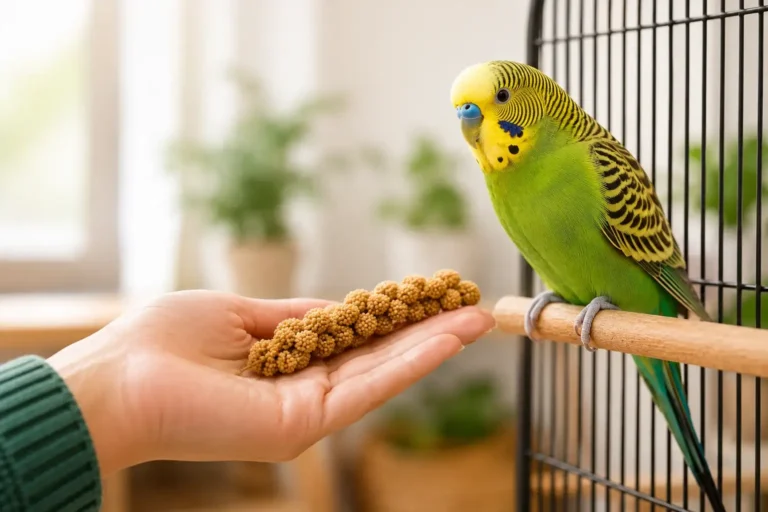
Millet serves as a popular treat. Spray millet comes on a natural stem. Hanging a sprig inside the cage gives the bird a physical task. They spend time stripping the small, round seeds from the stalk. Limit millet to small portions a few times a week. This keeps them hungry for their primary pellets.
Smaller options bring specific benefits to the bowl. Flax offers beneficial omega fatty acids. Chia seeds add a different texture to the meal. These tiny seeds stick well to chopped wet vegetables. Sprinkling a pinch over their fresh produce encourages them to taste the greens underneath. It creates a rewarding foraging moment without excess calories.
Foods Lovebirds Should Never Eat
Sharing a living space means birds encounter human meals daily. A curious bird will land on the kitchen counter to investigate a dinner plate. They watch food preparation with intense interest. They want to taste whatever you eat.
Some common pantry staples cause fatal reactions. Food toxicity happens fast. Identifying poisonous foods keeps the environment safe. Offering only safe treats prevents a sudden trip for emergency veterinary care. Keeping the cage doors secured during human dinner times eliminates temptation.
Table 3: Toxic Foods for Lovebirds
| Food | Why Dangerous |
| Avocado | Persin toxicity |
| Chocolate | Theobromine |
| Caffeine | Heart effects |
| Alcohol | Toxic |
| Onion | Blood cell damage |
| Garlic | Digestive toxicity |
| Apple seeds | Cyanide compounds |
| Fruit pits | Cyanide compounds |
| Raw beans | Lectins |
| Xylitol | Severe toxicity |
Avocado represents a significant household danger. Both the skin and the flesh induce persin toxicity. A small bite of leftover guacamole triggers a rapid decline in health. Birds cannot process this specific compound. Keep all avocado products out of the bird room.
Chocolate contains theobromine. A dropped brownie crumb on the living room floor tempts a wandering bird. Theobromine attacks the nervous system. Dark chocolate poses an elevated risk due to concentrated cocoa levels.
Unattended coffee mugs attract thirsty birds. Caffeine consumption leads to severe heart effects. A bird taking a sip from a warm cup faces a dangerous heart rate spike. Energy drinks carry the same risk. Alcohol acts as a systemic toxin. Wine glasses require covers when birds fly loose in the house.
Savory kitchen staples hide in many cooked meals. Onion and garlic feature in most sauces. Onion ingestion causes blood cell damage. Garlic leads to digestive toxicity. A bird licking a pasta plate consumes these hidden dangers. Store-bought crackers often contain onion powder. Keep human dinnerware away from the cage.
Fresh fruit preparation requires specific steps. Apple cores harbor cyanide-containing seeds. Fruit pits from cherries and plums hold similar cyanide compounds. Slicing fruit removes the danger. Discard all seeds in a closed trash can before offering fresh fruit pieces to your pet.
Raw beans possess dangerous lectins. Boiling beans neutralizes this specific threat. Offering uncooked beans from a pantry bag creates a health hazard.
Artificial sweeteners present hidden risks in modern snacks. Xylitol causes severe toxicity. Sugar-free gum and diet baked goods feature this ingredient. A bird shredding a discarded gum wrapper on a desk risks exposure to this lethal compound.
Clinical Insight
Small amounts of toxic foods create medical emergencies in parrots. Toxins from avocado and chocolate pose severe risks. If your lovebird suddenly becomes unusually quiet, loses balance, vomits, or refuses food after eating something unfamiliar, don’t wait to see if the symptoms improve. Contact an avian veterinarian without any delay.
Lovebird Feeding Schedule by Age
Nutritional demands shift as a bird grows. Adjusting the feeding frequency supports healthy development at every stage.
Baby Lovebirds
Growing chicks require frequent meals throughout the day. Their fast metabolism demands consistent caloric intake. Breeders provide multiple small feedings from dawn until late evening. This steady schedule ensures proper weight gain.
During the weaning phase, the routine changes. The young bird begins exploring soft solid foods in a shallow dish. The frequency of liquid meals drops as the bird learns to break apart small seeds.
Juveniles
Young birds possess high energy levels. They explore new textures with their beaks. A juvenile benefits from continuous access to formulated pellets. Keep the pellet bowl full during daylight hours.
Offer chopped fresh vegetables two times a day. Giving a fresh bowl in the morning and a second fresh bowl in the late afternoon encourages good eating habits. Remove any uneaten fresh produce after a few hours to stop spoilage.
Adults
Mature birds thrive on a set routine. They anticipate food at specific times. Provide fresh pellets and clean water in the morning. Offer a portion of chopped vegetables alongside the morning pellets. This timing mirrors natural morning foraging rhythms.
Remove the fresh food midday. Offering a small measure of healthy seeds in the evening gives the bird a quiet activity before sleep. A predictable schedule prevents dietary stress.
Common Lovebird Feeding Mistakes
Good intentions sometimes create poor dietary habits. Recognizing these routine missteps improves the daily feeding structure.
- Feeding a Seed-Only Diet: Filling a bowl with commercial seed mix limits vital nutrient intake. This routine causes unwanted weight gain. The bird misses out on vitamins found in fresh produce.
- Giving Too Many Treats: Offering frequent snacks ruins the appetite for main meals. A bird full of seeds will reject the nutritious pellets sitting in the food dish.
- Serving Too Much Fruit: Sweet slices carry elevated sugar levels. Providing oversized fruit portions creates an unbalanced caloric intake. Small fruit servings prevent digestive issues.
- Leaving Dirty Water: Birds carry food to the drinking dish for soaking. Dropped pieces create a cloudy bacterial mix within hours. Rinsing the dish once a day leaves a slick film on the plastic. Wiping the bowl clean multiple times keeps the supply hygienic.
- Making Sudden Diet Changes: Swapping an established food brand for a new one overnight causes stress. A bird might refuse to eat unfamiliar items. Blending new pieces with old food over a few weeks encourages natural acceptance.
- Overfeeding Millet: Hanging a full millet spray inside the cage turns a small reward into a primary food source. The bird fills up on empty calories. Breaking small clusters off the main stem keeps the item valuable for training sessions.
Frequently Asked Questions
Apart from what we have discussed, below are the most frequently asked questions that lovebird owners normally ask.
Can lovebirds eat bananas?
Yes, bananas provide a safe food choice. They offer valuable potassium for daily nutrition. The soft texture gives a small bird a different eating experience. Remove the peel before offering a slice. Serve small pieces a few times a week to manage sugar intake. A bird will wipe its beak on a perch after eating this soft fruit.
Can lovebirds eat rice?
Cooked plain rice serves as a safe carbohydrate source. Boil the grains in fresh water without adding salt or butter. Brown rice offers better nutritional value than white varieties. Serve a small spoonful warm. Ensure the grains sit at room temperature before feeding to prevent crop burns.
Can lovebirds eat bread?
Whole-grain bread works as an occasional treat. Avoid white bread because it lacks dense nutrition. Store-bought loaves contain added salt and preservatives. Tearing a small piece of plain wheat bread gives the bird a crunchy texture to pick apart. Offer bread in tiny amounts to prevent crop impaction.
Can lovebirds drink milk?
No, birds cannot digest dairy products. Avian bodies lack the specific enzymes needed to process milk. Drinking milk causes severe digestive distress and loose droppings. Providing fresh water in a clean bowl remains the only safe hydration method.
Can lovebirds eat eggs?
Yes, cooked eggs provide valuable protein. Boiling a plain egg creates a safe snack. Crushing the hard shell alongside the egg whites adds a natural calcium source. This nutrient boost helps during molting periods when feather growth demands extra resources.
How often should I feed my lovebird?
Keep a clean bowl of formulated pellets available at all times. Replenish the fresh water supply multiple times a day. Offer a separate dish of chopped fresh vegetables in the morning. Remove this fresh produce dish midday to stop rot. Provide a small seed treat in the evening. This structured routine maintains steady energy levels.
Can Lovebirds Eat Cucumber?
Yes, lovebirds can safely eat cucumber in moderation. Its high water content helps with hydration, especially during warm weather. Serve fresh cucumber in small slices or bite-sized pieces, and remove any leftovers after a few hours to prevent spoilage.
Can Lovebirds Eat Tomatoes?
Yes, ripe tomato flesh is generally safe for lovebirds when offered occasionally in small amounts. However, avoid feeding the leaves, stems, or unripe green parts of the tomato plant because they contain compounds that can be harmful to birds.
Can Lovebirds Eat Lettuce?
Yes, lovebirds can eat lettuce, but not all varieties offer the same nutritional value. Romaine lettuce is a better choice because it contains more vitamins and minerals, while iceberg lettuce is mostly water and provides little nutrition.
Can Lovebirds Eat Oats?
Yes, plain rolled or whole oats are safe for lovebirds when served in small amounts. Oats can provide fiber and carbohydrates, making them a suitable occasional treat. Avoid flavored or sweetened oatmeal products, which often contain added sugar, salt, or other ingredients that are unsuitable for birds.
Can Lovebirds Eat Cheese?
Cheese is not toxic to lovebirds, but it is not recommended as a regular food. Birds have a limited ability to digest dairy products, and cheese is often high in fat and sodium. A tiny piece is unlikely to cause harm, but healthier treats such as fresh vegetables or safe fruits are much better choices.
Conclusion
Providing a balanced diet keeps a bird active throughout the day. Building a proper daily plate starts with a stable foundation of formulated pellets. These pieces deliver steady nutrition in every bite. Offering fresh chopped vegetables alongside the main dish adds valuable dietary fiber. Crunchy produce encourages natural foraging habits.
Serving limited fruit portions introduces dietary variety without causing sugar spikes. Giving safe treats, such as a pinch of seeds, works well during quiet evening moments. Keeping a clear list of safe ingredients prevents kitchen accidents. A conscious effort to avoid toxic foods protects the bird from severe medical emergencies. A reliable feeding routine supports long-term physical condition.
Now that you have reviewed this lovebird diet guide, learn about complete housing, enrichment, and daily handling by reading our comprehensive Lovebird Care Guide.
References
- Lovebirds. 2025. Veterinarians Avian of Association 2025© https://cdn.ymaws.com/www.aav.org/resource/collection/2E4858A3-6F5E-42C1-B689-3122A9CD832F/Lovebirds-AAV-flat.pdf
- Lovebird Care Guide: Diet, Cage Setup, Behavior & Beginner Tips (2026). https://pawshatch.com/lovebird-care-guide/
- Saldanha, A., Machado, R. G., Fernandes, B. D., de Oliveira, J. C., Carvalho, G. A., Moreno, T. B., & da Rocha, C. (2023). Voluntary intake of captive psittacines fed mixed diets of seeds and extruded feed. Archives of Veterinary Science.
- Danyer, E., D. Lauria, D. Stefanutti, D. Cattarossi, and R. Ricci. 2026. “A Cross-Sectional Study on Parakeets Feeding and Housing Practices in Italy.” Journal of Animal Physiology and Animal Nutrition0: 1–15. https://doi.org/10.1111/jpn.70060.
- Sreeshma, M. P., Geetha, N., George, P. R., Sasidharan, M., George, S., Anil, K. S., & Sunanda, C. (2019). A study on management practices in selection, housing and feeding pet birds in Thrissur district. J. Vet. Anim. Sci., 50(1), 17–22.